
Best Fresh Fruit Packaging Options at a Glance
| Packaging type | Common applications | Main advantages | Main limitations |
|---|---|---|---|
| Vented PET or rPET punnet | Blueberries, raspberries, blackberries, cherries | Rigid protection, clear display, ventilation, easy labeling | Must match berry size, pack weight and cooling process |
| PET or rPET clamshell | Strawberries, grapes, berries and small fruit | Integrated hinged lid, good visibility, reclosable | Incorrect depth can compress fruit or allow excessive movement |
| Top-seal tray | Strawberries, berries and selected retail fruit | Large branding area, suitable for automated lines, reduced lid material | Requires compatible film, tray and sealing equipment |
| Molded pulp or cell tray | Apples, pears, peaches, nectarines, kiwifruit | Separates individual fruit and reduces rubbing | Limited visibility and can be affected by moisture |
| Corrugated carton | Citrus, melons, apples and bulk produce | Strong secondary packaging, printable and suitable for pallet transport | Strength must be maintained under humid and refrigerated conditions |
| Mesh or perforated bag | Oranges, mandarins, lemons, avocados and firm fruit | High airflow, low material use and low packing cost | Limited protection against pressure, impact and contamination |
| Lidded cup or sealed tray | Fresh-cut melon, pineapple, mango and mixed fruit | Portion control, leak management and convenient retail presentation | Requires strong hygiene, closure and cold-chain control |
This table is only a starting point. Two fruits with the same target pack weight may still require different container dimensions because their size, shape, density and sensitivity to pressure are different.
What Should Good Fresh Fruit Packaging Do?
Fresh fruit packaging has to perform several functions at the same time.
It must contain the fruit in a practical unit, protect it from mechanical damage, support cooling and ventilation, provide space for labeling and remain stable through carton packing and distribution.
A package can perform one of these functions well and still fail overall. A highly ventilated container may cool quickly but lose too much structural strength. A strong container may protect the fruit from external pressure but create bruising if the internal dimensions are too small. A visually attractive package may still be unsuitable if it reduces the number of packs that fit into each carton.
The best packaging therefore does not simply look good on the shelf. It has to work as part of the complete packing and distribution system.
How Fruit Characteristics Affect Packaging Selection
Before comparing materials, buyers should first understand the fruit being packed.
Fruit Size and Shape
Small, loose fruit such as blueberries behaves differently from a bunch of grapes or an individual apple.
Blueberries can settle into available space, while grape bunches contain stems, irregular gaps and variable bunch heights. Apples and peaches need enough separation to prevent rubbing and impact between individual pieces.
A container selected by stated capacity alone may therefore be misleading. A package described as suitable for 1 lb of blueberries will not necessarily hold 1 lb of grapes correctly.
Sensitivity to Pressure
Raspberries, blackberries and ripe strawberries are easily damaged by compression. A deep container may technically hold the required weight, but the fruit at the bottom can carry too much pressure from the upper layers.
Firmer fruit can tolerate deeper packing, but it may still require protection from movement, rubbing or impact during transport.
Respiration and Cooling Requirements
Fruit remains biologically active after harvest. It continues to respire, release heat and lose moisture.
Packaging openings can help cooling air move around the fruit, but the design must match the cooling method and carton arrangement. Ventilation holes on the retail container have limited value if they are blocked by neighboring packs or by the walls of the master carton.
Surface Moisture and Condensation
Packaging needs to balance water loss against moisture accumulation.
Too little ventilation may allow heat and condensation to build up. Too much ventilation may increase dehydration, weight loss and surface shriveling.
The objective is not to keep the package as open as possible. It is to maintain suitable airflow and humidity for the specific fruit and cold-chain conditions.
Best Packaging for Berries
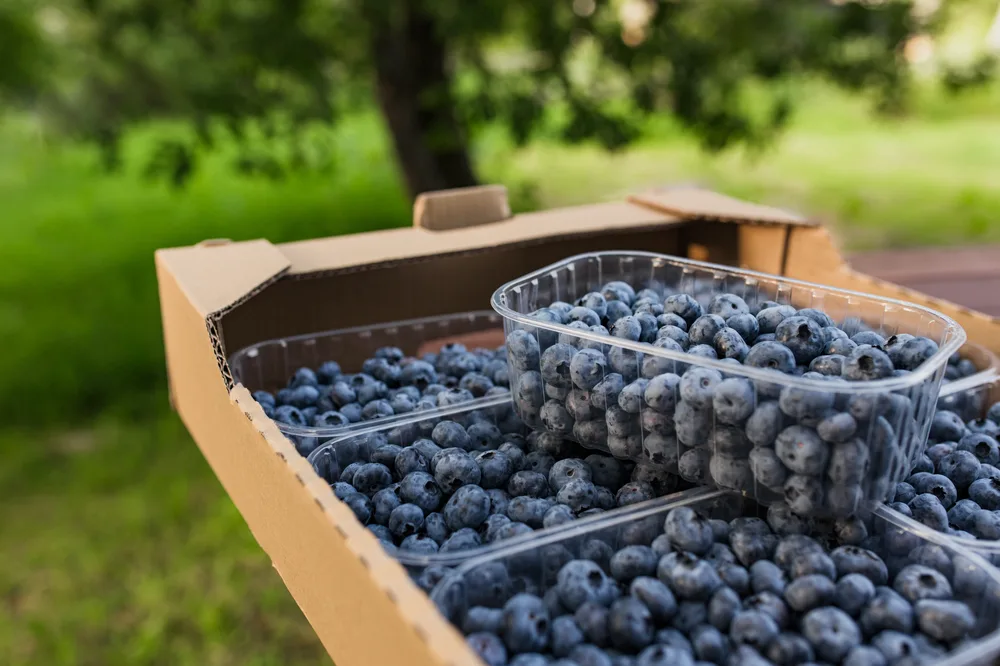
Rigid ventilated punnets and clamshells are commonly used for blueberries, raspberries, blackberries and strawberries because these fruits need protection from external pressure while remaining visible to retail buyers.
However, they should not all use the same container.
Blueberries
Blueberry packaging needs to combine ventilation, secure closure and openings that are small enough to retain individual berries.
The container depth should suit the target weight without creating unnecessary pressure on the lower fruit. It should also separate easily from the stack during manual or automatic filling.
Common retail formats include 4 oz, 6 oz, 8 oz, 12 oz and 1 lb packs, but the physical container should still be tested with the actual berry diameter and variety.
Raspberries and Blackberries
Raspberries and blackberries are softer and more easily compressed than blueberries.
A relatively shallow pack that limits the number of fruit layers is usually more suitable than a deep container with the same nominal capacity. The base and sidewalls should remain stable when filled, while the lid should close without pressing against the top layer.
Strawberries
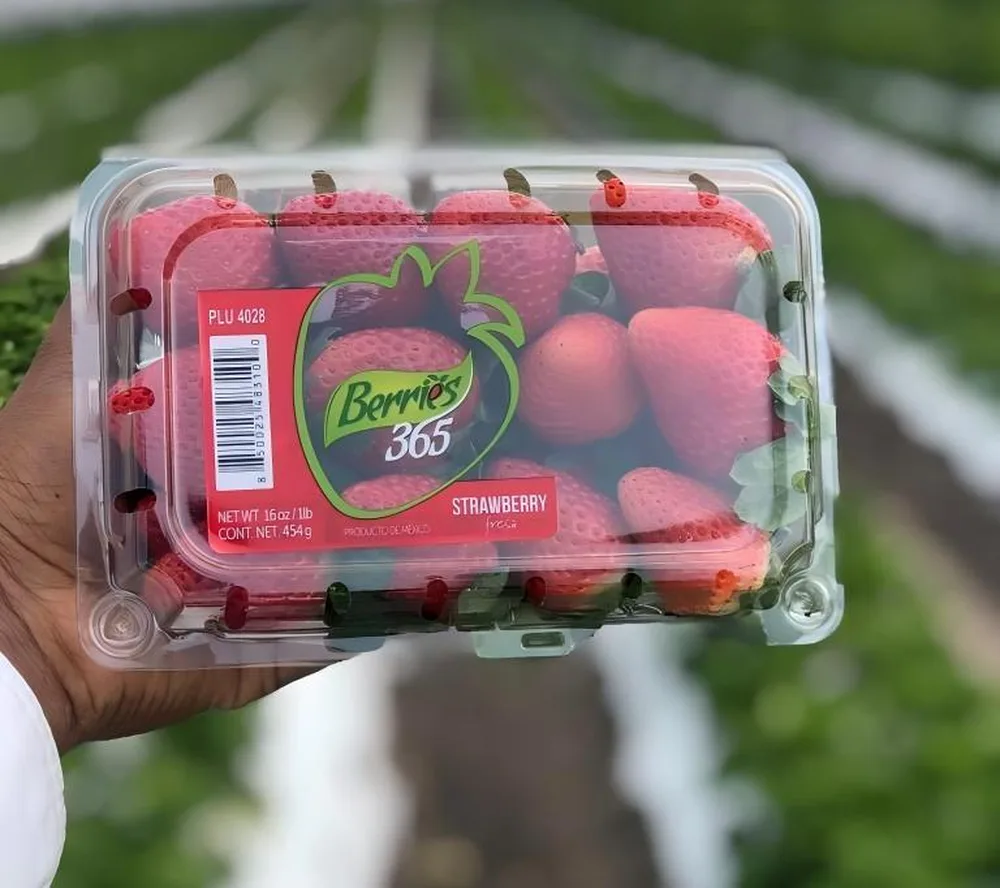
Strawberries need sufficient clearance for the fruit body and calyx.
If the container is too shallow, the lid can mark or compress the strawberries. If it is too deep, the fruit may move excessively and develop rubbing damage during transport.
Both clamshells and top-seal punnets can work. The decision often depends on the packing line, retailer preference, label area and whether a reclosable hinged lid is required.
Best Packaging for Grapes
Grapes are usually packed as bunches rather than as uniform individual fruit.
This makes bunch height, stem structure and berry diameter just as important as net weight. Two grape varieties sold in 1 lb or 2 lb packs may require different container depths because one variety forms compact bunches while another has longer or more open stems.
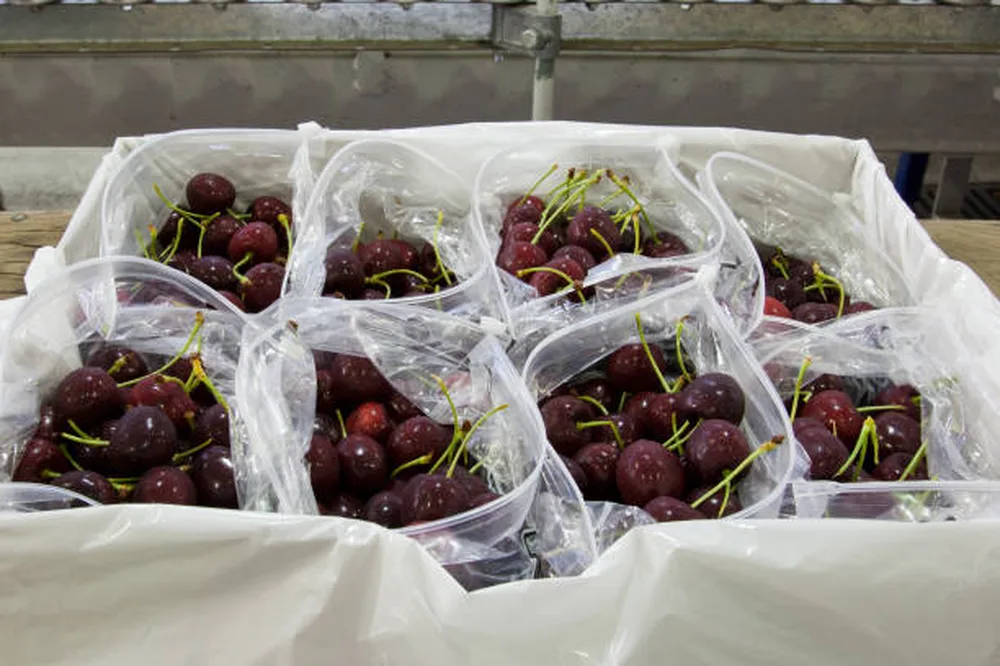
Rigid clamshells provide good visibility and stronger compression protection than flexible bags. Perforated bags may use less material and fit some packing programs, but they provide less resistance to pressure and handling damage.
For clamshell selection, buyers should check:
- bunch height and width;
- berry diameter;
- target pack weight;
- clearance above the bunch;
- stem contact with the lid and sidewalls;
- packs per shipping carton;
- manual or automatic closing requirements.
The final selection should be based on a filled sample rather than weight alone.
Best Packaging for Apples, Pears and Stone Fruit
Apples, pears, peaches, nectarines and kiwifruit are commonly packed with molded pulp trays, plastic cell trays, inserts or divided cartons.
The purpose of these structures is to keep each fruit in a stable position and reduce fruit-to-fruit contact.
Cavity dimensions should be matched to actual fruit diameter. If a cavity is too large, the fruit moves and rubs during transport. If it is too small, the tray can create pressure points and surface marks.
Ripening also needs to be considered. A tray that fits firm fruit at packing may behave differently after peaches, pears or nectarines soften during distribution.
For export, e-commerce or premium presentation programs, the retail tray must also fit the shipping carton without excessive vertical pressure or unused space.
Best Packaging for Citrus and Other Firm Fruit
Oranges, mandarins, lemons, avocados and other relatively firm fruit may be packed in mesh bags, perforated film bags, ventilated cartons or rigid retail containers.
Mesh bags offer strong airflow and allow consumers to see the fruit, making them suitable for multi-piece retail packs. Their main limitation is physical protection. They do little to prevent crushing, rubbing or impact during rough handling.
Corrugated cartons are widely used for bulk distribution because they support stacking, pallet handling and printed product information. Their dimensions and ventilation openings must be designed around the fruit weight, carton stacking pattern and cooling system.
Rigid retail containers may be appropriate when stronger presentation, portion control or product separation is required.
Best Packaging for Fresh-Cut Fruit
Fresh-cut fruit has different packaging requirements from whole fruit.
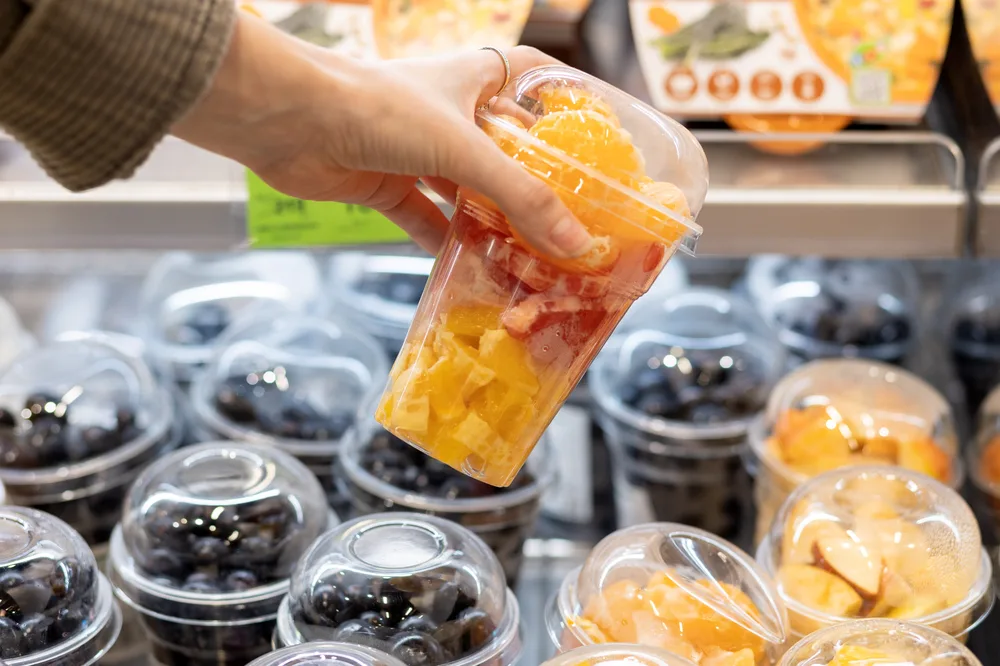
Once the skin has been removed or cut, the fruit is more exposed to juice leakage, moisture loss, discoloration, contamination and texture changes. Packaging must therefore work together with hygienic processing and uninterrupted refrigeration.
Common formats include:
- clear cups with separate lids;
- hinged lidded trays;
- top-seal trays;
- tamper-evident containers;
- compartment trays for mixed fruit.
The package should remain secure when tilted, stacked and transported. The lid or seal must not open under normal handling, and the label needs to remain attached in a cold and potentially humid environment.
If a sealed film is used to manage the internal atmosphere, the film should be selected and tested for the specific fruit mixture, package volume, respiration rate and storage temperature. A film that works for pineapple may not perform the same way with melon, berries or mixed fruit.
Packaging alone cannot make fresh-cut fruit safe or extend its life indefinitely. Processing hygiene, drainage, temperature control and validated shelf-life procedures remain essential.
Comparing Fresh Fruit Packaging Materials
PET and rPET
PET and rPET are widely used for clear rigid punnets, clamshells, trays and cups.
Their main advantages are transparency, stiffness, dimensional accuracy and compatibility with molded features such as hinges, locks, ventilation openings and stacking ribs.
They are particularly useful where consumers need to see the fruit and where the package must resist external pressure.
However, the performance depends on more than the material name. Sheet thickness, material distribution, sidewall design, closure structure and container depth all affect the finished package.
Recycling requirements and permitted recycled content should be checked for the destination market and customer program.
Corrugated Fiberboard
Corrugated cartons are primarily used as secondary or transport packaging.
They are suitable for printing, carton stacking and pallet distribution, but refrigerated and humid environments can reduce performance if the board grade and moisture resistance are not appropriate.
Ventilation openings must be positioned carefully. Larger or more numerous openings may improve airflow, but they can also reduce stacking strength.
The retail container, carton and pallet pattern should therefore be considered as one system rather than three separate purchasing decisions.
Molded Pulp
Molded pulp trays and punnets can cushion fruit, separate individual items and absorb some surface moisture.
They work well for apples, pears, peaches, kiwifruit and selected small-fruit programs. They also provide a paper-based appearance that some retail programs prefer.
Their limitations include reduced product visibility, possible loss of strength under wet conditions and less precise closure performance than many rigid plastic formats.
Mesh and Flexible Film
Mesh provides excellent airflow and uses relatively little material, but it offers limited protection from impact and compression.
Flexible perforated films and bags can be efficient for automated packing and can reduce packaging weight. Their performance depends on film strength, perforation design, sealing method and the fruit’s respiration requirements.
Specialized films may be used for modified atmosphere packaging, but they should not be treated as a universal solution.
Are More Ventilation Holes Better?
No. More ventilation holes do not automatically keep fruit fresher.
Ventilation design has to balance cooling, moisture and structural strength.
Too few openings may slow forced-air cooling and allow heat or condensation to accumulate. Too many openings may increase water loss, allow small berries to escape and weaken the sidewalls or lid.
Hole position also matters. Openings should support airflow through the filled container and align with the master carton’s ventilation path.
This is why two containers with the same number of holes may perform differently. Hole area, shape, position, container depth, fruit arrangement and carton layout all influence the result.
The correct design should be confirmed under the buyer’s actual cooling and storage conditions.
Is Modified Atmosphere Packaging Always Better?
Modified atmosphere packaging can help manage oxygen, carbon dioxide and moisture around selected fruits, but it is not automatically the best option for every product.
The fruit continues to respire after sealing. If the film permeability, package volume and temperature are not correctly matched, oxygen may fall too low or carbon dioxide may rise too high. This can cause undesirable odors, flavors, discoloration or deterioration.
MAP is therefore a controlled packaging system rather than a general label for any sealed fruit package.
A standard ventilated clamshell is not MAP. A sealed tray is not necessarily MAP either. The complete film and storage system must be designed and validated for the product.
How to Choose the Correct Container Size
Container selection should begin with the real fruit, not a catalogue capacity.
The buyer should provide:
| Information | Why it matters |
|---|---|
| Fruit type and variety | Varieties differ in size, shape, firmness and bunch structure |
| Fruit dimensions | Determines container length, width, depth and cavity size |
| Target net weight | Defines the commercial pack, but not the full container geometry |
| Required headspace | Prevents the lid from pressing against the fruit |
| Cooling method | Influences ventilation requirements |
| Manual or automated filling | Affects stacking, de-nesting and dimensional tolerance |
| Label dimensions | Determines the required flat label area |
| Shipping carton size | Controls packs per carton and ventilation alignment |
| Distribution route | Local retail, export and e-commerce create different handling risks |
A container that holds the target weight may still be unsuitable if it wastes carton space, cannot close reliably or performs poorly on the packing line.
How to Test Fruit Packaging Before Ordering
Sample testing is the most reliable way to confirm a packaging recommendation.
First, fill the sample with the actual fruit and target weight. Check whether the fruit sits naturally, whether the top layer contacts the lid and whether small fruit can escape through openings or closure gaps.
Next, test the closure using the intended packing method. Confirm that workers or machinery can close the package consistently and that it does not reopen during normal handling.
The filled package should then be placed under representative cooling and storage conditions. Observe cooling performance, condensation, moisture loss and label adhesion.
Finally, load the containers into the planned master carton. Check the number of packs per carton, stack stability, ventilation alignment and whether lower containers are compressed.
A trial shipment provides more useful information than drawings or stated capacity alone.
Which Packaging Is Best for Your Fruit?
The most suitable format can be summarized as follows:
| Application | Recommended starting point |
|---|---|
| Blueberries and firm small berries | Vented PET or rPET punnet or clamshell |
| Raspberries and blackberries | Shallow rigid punnet or clamshell |
| Strawberries | Vented clamshell or top-seal punnet |
| Grapes | Deep vented clamshell, punnet or perforated bag |
| Apples, pears and kiwifruit | Cell tray, molded insert or divided carton |
| Peaches and nectarines | Individual support tray with suitable cavity dimensions |
| Citrus and firm bulk fruit | Mesh bag, perforated bag or ventilated carton |
| Fresh-cut fruit | Lidded cup, sealed tray or tamper-evident container |
| Mixed fruit platter | Compartment tray or secure lidded container |
| Bulk transport | Ventilated corrugated carton or reusable crate |
These recommendations narrow the options, but they do not replace physical testing.
Frequently Asked Questions
What is the best packaging material for fresh fruit?
There is no single best material. PET and rPET are suitable for clear rigid retail containers, corrugated fiberboard is commonly used for transport cartons, molded pulp supports individual fruit, and mesh or film works for selected firm fruit. The packaging structure and application should be selected before comparing materials.
Are plastic clamshells good for fruit?
Plastic clamshells are well suited to berries, strawberries, grapes and other fruit that requires visibility and rigid protection. Their depth, ventilation openings and closure must be matched to the fruit and packing process.
Should fresh fruit packaging have holes?
Most whole-fruit retail packs require some form of ventilation, especially when forced-air cooling is used. The required open area and hole position depend on the fruit, container geometry, cooling method and shipping carton.
Should fruit packaging be airtight?
Whole fruit is normally not packed in a standard airtight container because it continues to respire. Fresh-cut fruit may use sealed packaging, but the closure, film and storage conditions must be validated for the product.
Can one fruit container be used for several fruits?
Sometimes. The same container may work when the fruits have similar dimensions, sensitivity, ventilation requirements and target weight. A matching net weight alone is not enough to confirm compatibility.
Is molded pulp better than plastic for fruit?
Neither material is universally better. Molded pulp offers cushioning and a paper-based appearance, while rigid PET provides visibility, dimensional precision and reliable molded closures. The correct choice depends on the fruit, retail format, moisture conditions, logistics and local waste system.
Should I request fruit packaging samples?
Yes. Samples allow the buyer to test actual fill weight, fruit fit, closure, headspace, cooling, labeling, carton loading and transport performance before placing a bulk order.
Fresh Fruit Packaging From StlPak
StlPak manufactures thermoformed PET and rPET packaging for fruit growers, packers, exporters, distributors and fresh-cut processors.
Our range includes blueberry punnets, strawberry clamshells, grape containers, fruit support trays, fresh-cut fruit cups, compartment trays and tamper-evident containers.
With more than 600 existing molds, we can compare available dimensions, depths, ventilation layouts and closure structures before recommending custom tooling. Free samples are available for suitable projects so buyers can test the packaging with their actual fruit, packing method and shipping carton.
For a more accurate recommendation, provide the fruit type, fruit dimensions, target pack weight, preferred packaging format, shipping carton size, packing method and destination market.