
This article covers one specific type: tear-off strip tamper-evident containers — the format used in StlPak‘s PET and rPET food container range. Buyers comparing this format with other Disposable Plastic Food Containers can also review StlPak’s broader product range. The hinged-lid versus separate-lid guide explains how the attached lid changes packing and use, while the container structure guide places this closure within the wider design system.
In this design, the tamper-evident feature is a strip of plastic formed directly into the container during production. It is not a label, tape, or band applied afterward. When the lid and base are fully closed, the strip forms part of the locking edge and blocks normal access to the opening point. To open the container, the consumer must first tear and remove the strip — leaving a visible, irreversible change that shows the package has already been accessed.
Three things are worth understanding from the start:
- The strip is integrated into the container, not added separately
- Its purpose is to show evidence of first opening, not to make the container impossible to open
- After the strip is removed, the lid may still reclose — but the original tamper-evident condition cannot be restored
How the Closure Works
A tear-off strip container has four elements that work together: the strip itself, the tear line connecting it to the container, the lid-and-base locking edge, and the pull tab.
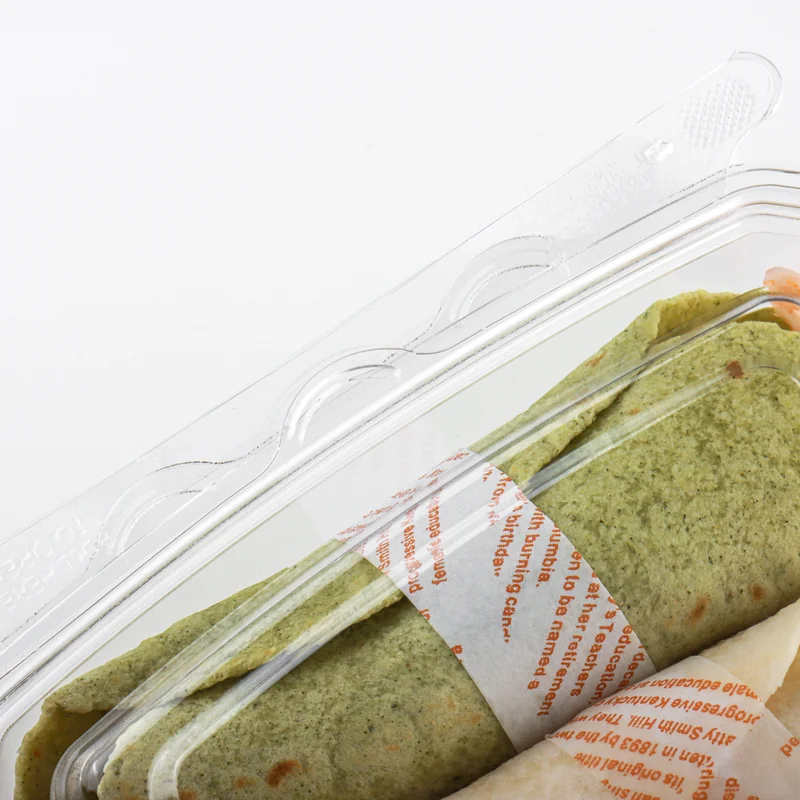
The strip runs along the front opening edge, part of the perimeter, or a larger section of the closure depending on the container design. Because it’s formed as part of the container, no separate sealing step is needed — closing the lid correctly activates the security feature.
The tear line connects the strip to the container through a series of thin plastic bridges. This connection needs to do two things that pull in opposite directions: hold securely through filling, cartoning, transport, and retail handling, then separate cleanly when the consumer pulls the tab. Bridge width, thickness, spacing, and shape all determine whether this balance is achieved. A line that’s too weak breaks before purchase; one that’s too strong frustrates the consumer or tears unevenly.
The locking edge is the interlocking structure between the lid and base. When the container is closed, this edge holds the lid in place. The strip prevents the locking edge from being released normally — meaning the consumer cannot lift the lid until the strip has been removed. Critically, the surrounding closure should also prevent the lid from being lifted from a corner or side edge while the strip remains intact. If it can, the tamper evidence is easily bypassed.
The pull tab is the starting point for opening. It should be immediately visible, easy to grip, and positioned away from obstructing edges. A tab that’s too small or sits flush against the container forces consumers to use fingernails or tools — which is both inconvenient and a signal of poor design.
Closing the Container Correctly
Tamper evidence only works if the container is properly closed. This sounds obvious, but it’s where most real-world failures happen.
Fill level. Food should sit below the lid and locking edge. Overfilling pushes upward against the lid and prevents complete engagement. Oil, sauce, crumbs, or small product pieces on the rim also interfere with the snap-fit. The required headspace varies by product — bulky bakery items and irregular snacks need more clearance than flat or compact foods.
Alignment. The lid must sit evenly over the full locking perimeter before pressure is applied. For hinged containers, the lid folds along the hinge and meets the front and side closure points naturally. For separate-lid formats, the operator needs to confirm even positioning around the entire edge. The strip area must also align with its corresponding lock position — a container that looks closed with one side offset may not be fully engaged.
Pressure. Even pressure along the full closure edge is required. Pressing only one corner or one side leaves the rest unsecured. Some designs produce a click when fully engaged; others need visual confirmation.
Once correctly closed, the package is in its original tamper-evident condition: strip intact, pull tab untouched, tear line complete, lid seated evenly.
What Happens at First Opening
The consumer locates the pull tab, grips it, and pulls the strip away from the container. As the strip moves, the plastic bridges separate along the tear line in a controlled path. Once the strip clears the locking edge, the lid can be lifted normally.
What remains afterward:
- The strip is absent or detached
- The tear line shows broken or separated bridges
- The opening edge has a changed profile
These signs are visible even after the lid is pressed back onto the base. The strip cannot be reattached — the molded bridges are permanently broken, and placing the loose strip next to the container doesn’t recreate the original sealed appearance.
Reclosure After Opening
Some tear-off strip containers can be reclosed; others cannot. This depends on whether the snap-fit locking edge remains functional after the strip is removed.
In reclosable designs, the strip and the snap closure perform separate jobs. The strip provides first-opening evidence; the remaining locking edge holds the lid closed afterward. This is useful for products consumed across multiple occasions — snacks, fruit, bakery, cheese, deli items, prepared meals.
In other designs, the strip is part of the primary locking structure. Removing it also releases or weakens the main closure, and the lid may no longer hold reliably.
Reclosure performance should be tested before selecting a model, not assumed from the product description.
Does the Container Need a Security Label or Shrink Band?
An integrated tear-off strip may eliminate the need for separate sealing materials entirely. Closing the lid correctly activates the security feature — no additional tape, label, or shrink band required. This removes a manual step, reduces material cost, and eliminates the risk of a seal being skipped during packing.
Additional seals may still make sense when a retailer requires a specific closure format, the product needs two visible levels of security, a label is also carrying brand or traceability information, or the distribution environment creates handling risks that the container alone doesn’t address.
One limit: an external label cannot fix a poorly closed container. A shrink band over a lid that isn’t fully engaged still fails at the locking edge. The container closure has to work first.
Tamper Evidence, Leak Resistance, and Airtightness
These are separate properties that need to be evaluated separately.
| Property | What it means |
|---|---|
| Tamper-evident | Shows whether the container has been opened |
| Reclosable | Allows the lid to be closed again after opening |
| Leak-resistant | Reduces the risk of liquid escaping |
| Airtight | Restricts air movement through the closure |
A container can be tamper-evident without being leakproof. Leak performance depends on lid-base fit, flange geometry, closure pressure, material stiffness, and the specific food being packed. A container that works well for dry snacks may fail with fruit juice, sauces, or oily deli products. Test each property against the actual food and expected transport conditions.
What to Test Before Ordering
An empty visual inspection is a starting point. Real performance shows up under actual packing and handling conditions.
Closing consistency. Fill with the actual product and close using the planned process. Confirm lid alignment, required pressure, full locking edge engagement, and whether operators can reliably identify an incomplete closure.
Strip integrity through handling. Place closed containers in cartons, stack them, and move them through the expected distribution process. Confirm the strip, pull tab, and tear line remain intact.
Opening experience. Ask several users to open the container. The pull tab should be easy to find and grip. The strip should tear along the intended path with reasonable force and release the lid completely. No tools should be required.
Bypass test. Try lifting the lid from corners and side edges while the strip remains intact. Normal access to the food should not be possible without removing or visibly damaging the strip.
Reclosure. If the container is intended to be reclosable, confirm how firmly the lid re-engages after the strip is removed and whether the missing strip remains clearly visible.
Full product and transport test. Repeat with actual fill weight, product height, moisture or oil content, chilled conditions, carton stacking, and delivery vibration. A closure that works empty under room-temperature conditions may behave differently once the base flexes under load.
Suitable Food Products

Tear-off strip containers are used across a wide range of retail and prepared foods:
- Dry and ambient products — nuts, dried fruit, snacks, confectionery, bakery items
- Fresh and chilled products — cheese, deli foods, fresh-cut fruit, salads, desserts, ready-to-eat meals
Net weight, product height, moisture content, fill temperature, and whether the consumer needs to reclose the package all affect which container model is most suitable. A dry snack and a fresh-cut fruit product may both fit a tear-off strip container, but they have different requirements for headspace, moisture control, anti-fog performance, and leak resistance.
Common Questions
Is the tear-off strip applied separately during packing?
No. It’s formed as part of the plastic container during thermoforming. No separate sealing operation is needed.
Can the strip be reattached after removal?
No. The molded plastic bridges are permanently broken once torn. The original continuous connection cannot be reconstructed.
Does reclosing the lid restore the tamper-evident condition?
No. The lid may close again through the remaining snap-fit structure, but the missing strip continues to show that the container has been opened.
Can the container be opened from another side without removing the strip?
A properly designed closure prevents this. The surrounding locking edge should block normal access from corners and side edges while the strip remains intact. Confirm this through bypass testing before ordering.
Does the container need an additional security label?
Not necessarily. An integrated strip may provide sufficient evidence on its own. Additional labels or bands can be added when the retail program, retailer requirement, or product type calls for them.
Is a tear-off strip container leakproof?
Not automatically. Tamper evidence and leak resistance are separate properties that require separate testing.
StlPak supplies clear PET and rPET food containers with integrated tear-off strip closures across different container formats. Existing models can be evaluated through samples. Container dimensions, locking position, opening direction, reclosure performance, and material specification can be discussed for specific food products and packing requirements.
Tear-off strip containers cover ready-to-eat and prepared food formats. For whole fresh fruit such as berries and grapes, vented fruit punnets are the more common retail choice.