
Packaging cannot stop fruit from ripening. What it can do is change the conditions surrounding the fruit — and those conditions determine how quickly quality declines.
After harvest, fruit continues to respire, release heat, and lose moisture. Some fruits also produce or respond strongly to ethylene. Packaging influences these processes by affecting airflow, moisture retention, gas exchange, cooling efficiency, and protection from physical damage. But packaging is only one part of shelf-life management. Fruit variety, harvest maturity, precooling speed, storage temperature, hygiene, and cold-chain stability are equally important — sometimes more so.
This guide explains how different packaging designs affect the shelf life of berries, grapes, and other fresh fruits, and what buyers should test before placing a bulk order. Browse StlPak’s fruit packaging range to see the container types discussed below, or explore our broader Disposable Plastic Food Containers range for other food applications. For product-specific selection, see why different fruits need different container shapes and how to choose fresh-cut fruit packaging.
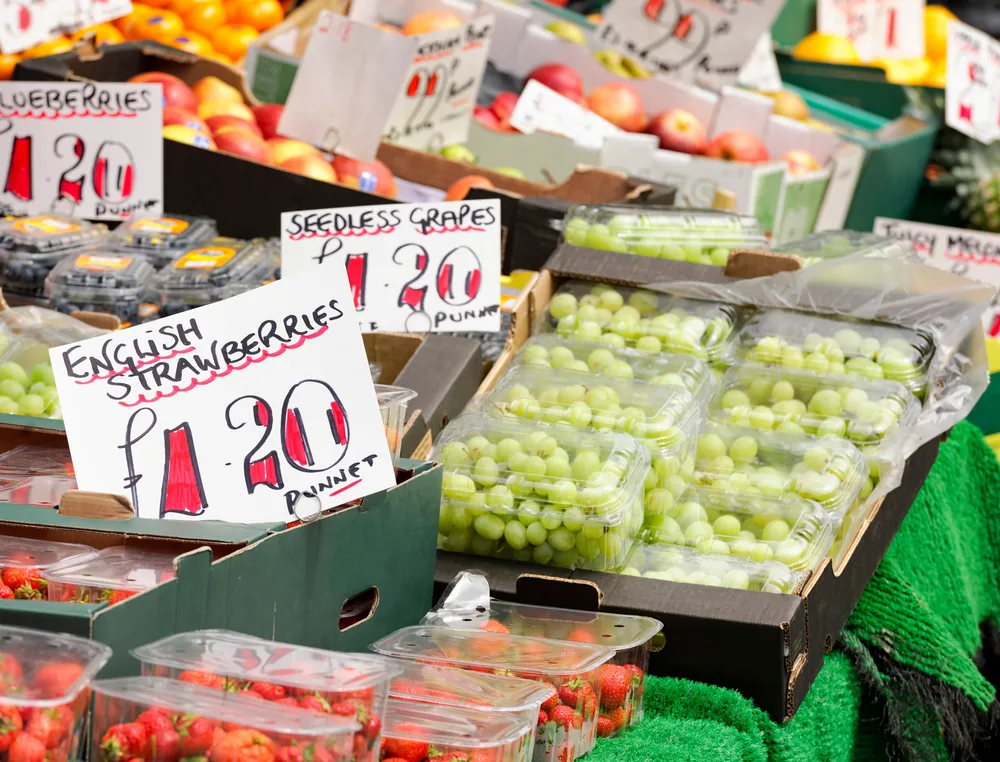
Climacteric vs Non-Climacteric: Why It Matters for Packaging
Fruits are commonly divided into two groups based on their ripening behavior, and understanding the difference helps explain what packaging can and can’t influence.
Climacteric fruits — bananas, mangoes, apples, pears, avocados, kiwifruit — experience a surge in respiration and ethylene production during ripening. They can continue to ripen considerably after harvest, which means ethylene management and gas exchange become important packaging considerations for these categories.
Non-climacteric fruits — grapes, strawberries, blueberries, most citrus — do not ripen further after picking. However, they still respire, lose moisture, soften, and become vulnerable to bruising, mold, and decay. For these fruits, the packaging priorities are cooling support, moisture balance, and physical protection rather than gas composition.
Ripening and spoilage are also not the same process. Ripening is a natural physiological change. Spoilage results from microbial growth, physical damage, excessive moisture, aging, or unsuitable storage conditions. Packaging can slow spoilage; it cannot reverse ripening that has already occurred.
Ventilation: The Most Misunderstood Element
Ventilation is where most packaging decisions go wrong — either by assuming more holes means better freshness, or by treating ventilation as a standalone feature rather than part of a system.
The purpose of ventilation is to allow respiratory heat and gases to escape, and to let cold air reach the fruit during precooling. Both matter enormously for non-climacteric fruits like berries and grapes, which are typically packed while they may still contain field heat.
What determines whether ventilation actually works is more nuanced than hole count. Total open area, hole position, airflow through the lid versus base versus sidewalls, label coverage, fruit arrangement inside the package, alignment between punnet openings and carton vents, and pallet configuration all affect whether cold air can reach the fruit. Two packages with identical hole counts may cool at very different rates if their openings are positioned differently relative to the airflow direction.
A practical example: StlPak’s blueberry punnets incorporate openings in the lid, base, and sidewalls. The sidewall openings are specifically designed to provide additional airflow paths when containers are packed closely together and the upper or lower openings are partially obstructed by adjacent packaging or labels. The goal isn’t simply more holes — it’s maintaining effective airflow across realistic packing conditions.
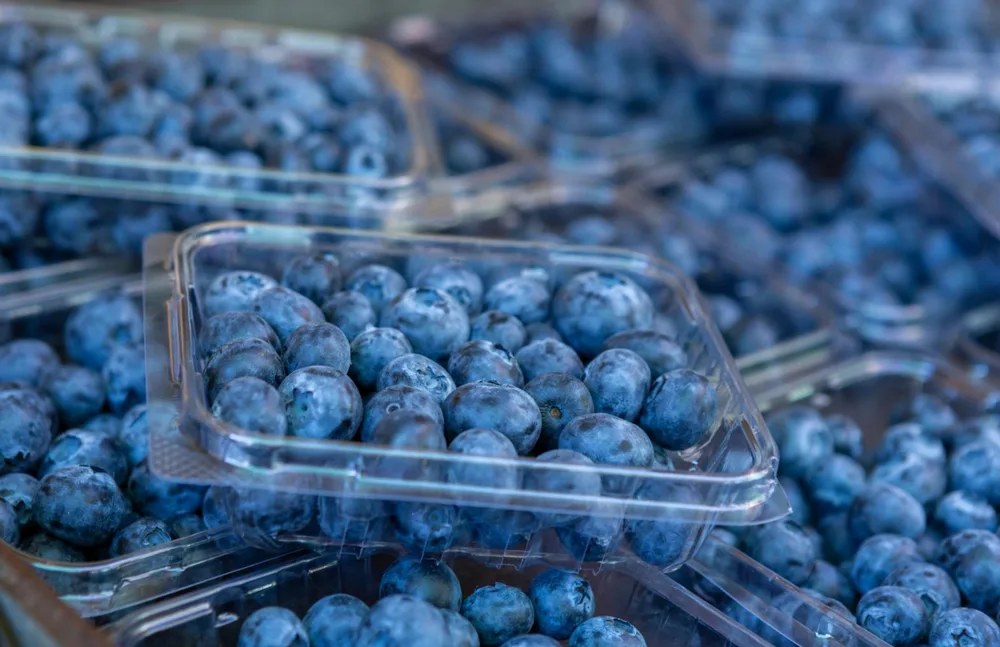
More ventilation also has a cost. Every opening removes material from a load-bearing surface. Excessive or poorly positioned openings can reduce the rigidity of the base, lid, or sidewalls. When the container deforms under stacking pressure, that pressure transfers directly to the fruit. Large openings can also allow small berries to escape, trap stems, or create contact points that cause abrasion. And increased airflow accelerates moisture loss — which brings its own set of problems.
When fruit is cooling too slowly, the real causes are often label coverage over the main ventilation area, inadequate alignment between punnet and carton openings, packages placed too closely together on the pallet, or insufficient forced-air cooling capacity. Adding more holes to the punnet rarely solves these problems. Adjusting hole position, improving carton alignment, or changing the pallet arrangement is usually more effective.
Moisture Loss and Condensation: Two Sides of the Same Problem
Fresh fruit continuously loses water after harvest. Too much moisture loss leads to weight loss, shriveling, dry stems, reduced firmness, and a dull retail appearance. But preventing moisture loss entirely creates a different problem — moisture released by the fruit accumulates inside the package and, when temperatures fluctuate, forms visible condensation.
These two risks pull in opposite directions, and packaging has to balance both simultaneously.
A relatively closed package maintains higher internal humidity, which slows moisture loss from the fruit surface. But if temperatures drop below the dew point of the trapped humid air — when cold fruit enters a warm distribution centre, or when refrigeration is interrupted during transport — water vapor condenses into droplets on the fruit and packaging surfaces. Visible condensation reduces package clarity and makes the fruit look less fresh. More seriously, surface water creates conditions that favor mold and microbial growth, particularly on fruit that is already bruised or physically damaged.
The balance point depends on fruit type, package depth, headspace, closure design, ventilation, and the expected temperature range through the supply chain. A deeper package holding the same net weight creates a different internal microenvironment than a shallower one — more headspace, different air circulation patterns, different condensation risk. This is one reason StlPak evaluates actual fruit dimensions and fill height rather than recommending containers by nominal capacity alone.
Anti-fog treatment is frequently misunderstood in this context. It doesn’t remove water from inside the package — it spreads condensed moisture into a more transparent, even layer so that separate droplets don’t form and obscure the fruit. This improves retail visibility, but it doesn’t address the underlying cause. Anti-fog is not a substitute for proper precooling, adequate drainage before packing, or cold-chain stability.
Ethylene and Gas Exchange
Ethylene is a plant hormone involved in fruit ripening and senescence. Some fruits produce significant amounts; others are particularly sensitive to it. In packaging with limited gas exchange, ethylene and carbon dioxide may accumulate while oxygen levels fall — accelerating ripening, softening, and color changes in sensitive varieties.
A standard vented PET punnet doesn’t actively manage ethylene. Its openings allow ambient air exchange, which is sufficient for most whole-fruit retail applications. This is meaningfully different from technologies specifically designed to modify the internal atmosphere:
| Technology | How it works |
|---|---|
| Standard vented punnet | Allows passive air exchange; no gas composition control |
| Microperforated film | Controls gas permeability to slow respiration |
| Modified atmosphere packaging (MAP) | Actively maintains specific O₂/CO₂ levels matched to the fruit |
| Ethylene-absorbing inserts | Physically removes ethylene from the package interior |
| Active packaging systems | Uses sachets or materials to regulate internal atmosphere |
MAP requires the film or package permeability to be precisely matched with the fruit’s respiration rate under the expected temperature range. A specification that works for one variety at one temperature may be completely wrong for the same variety at a different maturity, or for a different fruit entirely. Ordinary vented clamshells and punnets should not be described as MAP — the term implies a specific, validated internal atmosphere that passive ventilation cannot achieve.
Physical Damage: The Shelf-Life Factor Packaging Controls Most Directly
Respiration, moisture, and gas exchange are all influenced by packaging to varying degrees. Physical damage is where packaging has the most direct and immediate impact — and where poor design most reliably shortens shelf life.
Impact damage occurs during drops, sudden movement, and rough handling at any point from harvesting through retail restocking. Vibration damage builds up during transport, as fruit repeatedly shifts and rubs against adjacent fruit or packaging surfaces — excessive headspace makes this worse by giving fruit more room to move. Compression damage affects containers near the bottom of a pallet stack, where the weight of everything above must be absorbed by the lid, corners, and sidewalls. If the container deforms, stacking pressure transfers directly to the fruit. A package with excellent ventilation can still shorten marketable shelf life if it collapses under load and bruises the bottom layer.
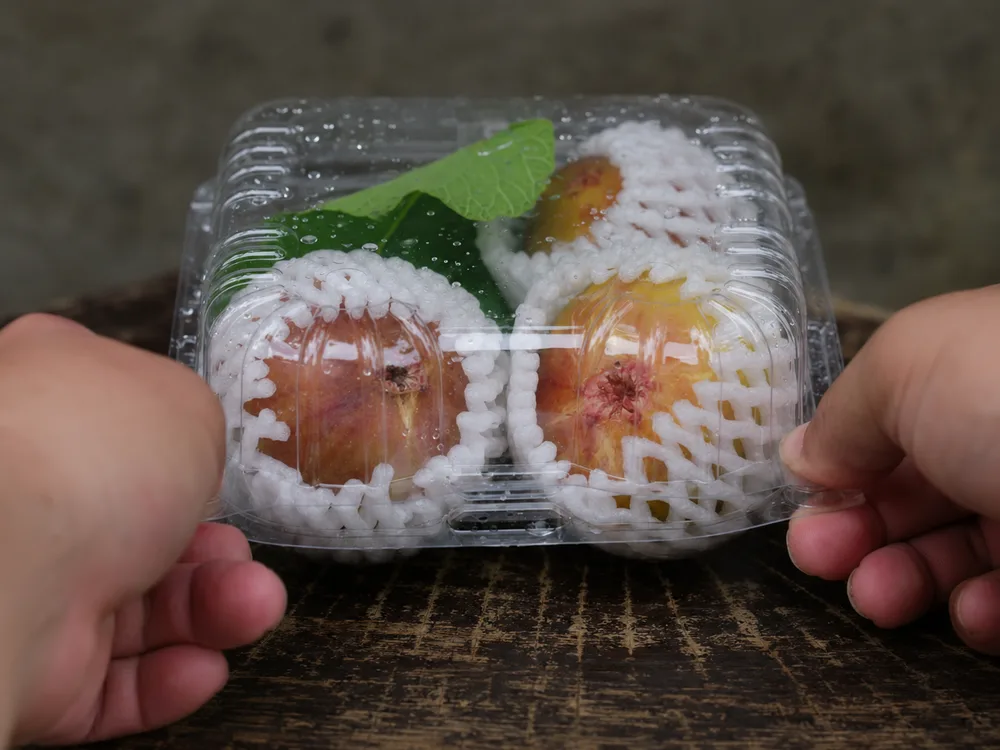
Material weight contributes to strength, but it’s not the only factor. Sidewall rib geometry, corner design, lid structure, locking point placement, and stacking features all affect how pressure is distributed through the container. Package depth matters independently: a container that’s too shallow or overfilled presses the lid against the fruit; one that’s too deep allows excessive movement during transport. Getting depth right is as important as getting ventilation right.
Stems and sharp internal edges create additional risks for grapes and cherries, where puncture and abrasion from the packaging itself can damage the fruit before it reaches the consumer.
How Packaging Priorities Differ by Fruit
Different fruits have different respiration rates, physical structures, and primary causes of quality loss. The packaging needs to address the most relevant risks for each category.
| Fruit | Main quality risks | Packaging priorities |
|---|---|---|
| Blueberries and small berries | Heat buildup, moisture loss, compression, decay | Balanced ventilation, rapid cooling, movement control, stacking strength |
| Strawberries | Bruising, surface moisture, mold, compression | Sufficient headspace, limited layers, visibility, gentle support |
| Grapes | Berry shatter, stem dehydration, heat buildup, compression | Cluster support, suitable depth, strong sidewalls, aligned ventilation |
| Apples, pears, kiwifruit | Impact, bruising, ethylene exposure | Individual separation, cushioning, airflow, stacking strength |
| Fresh-cut fruit | Juice leakage, oxidation, condensation, microbial growth | Secure sealing, leak resistance, hygiene, uninterrupted cold chain |
Berries
For blueberries, raspberries, and blackberries, the primary risks are heat buildup, moisture loss, compression damage, and decay. These fruits benefit from rapid cooling and balanced ventilation — but the ventilation has to work within the carton and pallet system, not just in the individual punnet. Raspberries and blackberries are more fragile than blueberries and more sensitive to stacking pressure, which means fill height control and container rigidity under load are often more important than maximizing the ventilation area. See StlPak’s blueberry packaging options for examples of ventilation and structure designed for small-berry applications.
Strawberries
Strawberries bruise easily and are sensitive to surface moisture and mold. A relatively shallow container limits the weight placed on the lower fruit and reduces the risk of compression bruising. The lid needs enough clearance to avoid pressing against the top layer without leaving so much empty space that the fruit shifts during transport. Product visibility matters commercially because consumers inspect color and surface condition through the lid before purchasing.
Grapes
Grape packaging must fit the bunch, not just the target net weight. Insufficient headspace compresses the upper berries; too much space allows clusters to move and increases berry shatter. Strong sidewalls and stable stacking geometry are particularly important because the container must retain its shape throughout a long distribution route. Ventilation should support cooling without weakening the areas of the container that carry stacking loads, and without creating openings that allow stems to become trapped.
Fresh-Cut Fruit
Cut fruit requires a different approach from whole fruit. Removing the natural protective skin exposes tissue to oxidation, juice leakage, condensation, and microbial growth. Secure closure and leak resistance become the primary requirements, alongside strict hygiene and uninterrupted refrigeration. If a sealed or microperforated film is used, its permeability must be validated against the specific fruit mix, fill weight, and expected temperature range — a film specified for one product may behave very differently with another.
What to Test Before Bulk Orders
Testing an empty container confirms nothing about how it will perform with real fruit. Buyers should test under conditions that reflect the actual commercial application as closely as possible.
StlPak can provide existing fruit packaging samples for these evaluations, allowing buyers to compare different ventilation layouts, depths, and structures before confirming a specification.
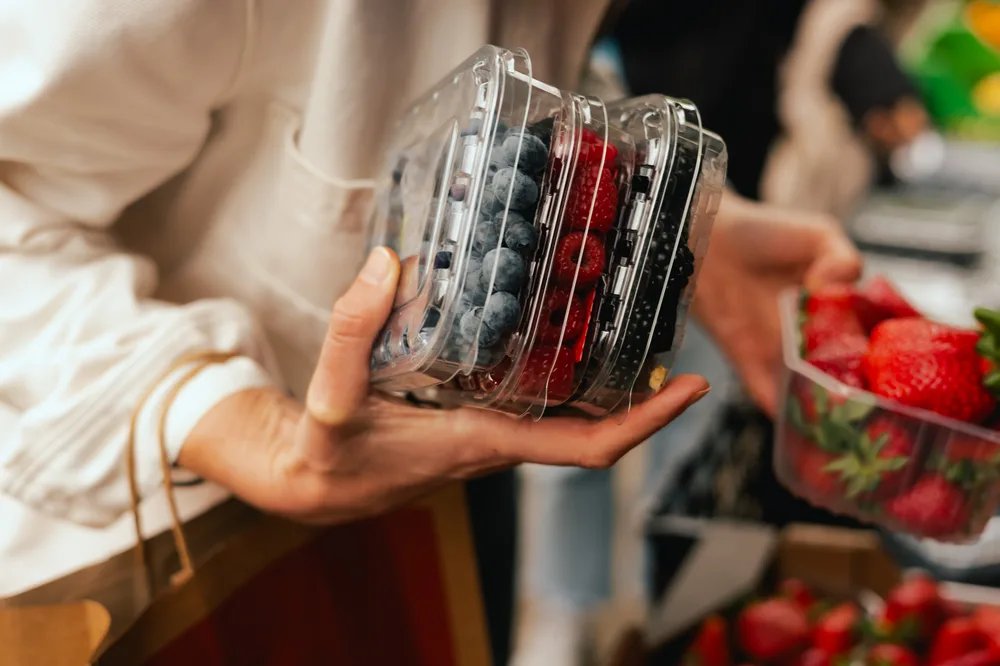
Fruit fit and headspace. Fill the sample with the actual fruit variety at the target net weight. The fruit should sit naturally with the lid closing without contacting the product. There should be enough headspace to prevent compression, but not so much empty space that the fruit shifts during handling. For grapes, confirm that the bunch height fits without lid pressure; for berries, check that no fruit can escape through ventilation openings or closure gaps.
Closure and handling. Close the container using the intended packing method — manual or automated. Confirm that the closure engages consistently, stays closed under normal handling and vibration, and remains practical for workers or equipment to operate at production speed. Apply the actual label during this test, not a placeholder. Labels covering the main ventilation openings change how the package breathes and must be accounted for in the specification.
Cooling performance. Place filled, labeled containers packed in the intended carton configuration under representative cooling conditions. Monitor how quickly the fruit reaches its target core temperature. Compare different hole layouts or carton arrangements if cooling is uneven or slower than expected. The ventilation path through the punnet, carton, and pallet needs to be evaluated as a system.
Storage and transport simulation. Reproduce refrigerated storage, stacking loads, transport vibration, temperature fluctuations, and retail display conditions as closely as practical. Record the variables that matter for the specific fruit: weight loss, shriveling, stem condition, firmness, mold, condensation, juice leakage, bruising, berry shatter, container deformation, and closure integrity. The test duration should reflect the actual expected route and sales cycle.
If the first result is unsatisfactory, change one variable at a time — package depth, hole position, material weight, or carton arrangement — so it’s possible to identify what actually caused the problem.
The Limits of Packaging
Packaging is one tool in post-harvest management, not the whole system. Temperature management has a greater influence on respiration and ripening than container design alone. A well-designed package in a disrupted cold chain will still produce poor results. Poor initial fruit quality, delayed precooling, or a single temperature break during distribution can outweigh the benefit of any packaging specification.
What packaging can do, when it’s designed correctly for the fruit and supply chain, is support faster cooling, reduce excessive moisture loss, limit condensation under realistic temperature conditions, and protect the fruit from bruising and compression damage. These are meaningful contributions — they just need to be understood as part of a complete post-harvest system, not as a standalone solution.
Buyers working with StlPak can request samples for product-fit, closure, ventilation, carton-loading, and stacking tests before committing to a bulk order. This gives a more reliable basis for specification than comparing capacity, hole count, or appearance alone.