
Custom Blueberry Packaging: Existing Clamshells, Labels, or New Molds?
Not every blueberry packaging project needs a new container.
The right question isn’t “what should the packaging look like?” It’s “what does the packaging actually need to do?” — for the fruit, the packing line, the cold chain, and the retail shelf.
At StlPak, we help growers, exporters, and retail brands find the most practical route: whether that’s an existing clamshell, a labeling solution, or custom tooling.
The Decision Starts with the Fruit, Not the Brand
Before choosing artwork, materials, or a container design, confirm what the packaging needs to perform.
Key questions to answer first:
- What is the target pack weight? (0.28 lb, 0.37 lb, 0.55 lb, 1 lb, or 1.1 lb?)
- What is the average blueberry diameter — standard or jumbo?
- Is packing manual, semi-automatic, or fully automated?
- What is the export route and cold-chain condition?
- What are the outer carton dimensions and stacking requirements?
- What retail market is this for, and are there specific label or material requirements?
- What is the estimated annual order volume?
These details determine whether an existing structure works — or whether you actually need something new. Skipping this step and going straight to branding is where most packaging decisions go wrong.
Four Routes — and How to Choose
| Situation | Route | Why |
|---|---|---|
| Existing clamshell fits the fruit, fill, transport, and stacking requirements | Use an existing mold | Fastest to market, lowest initial investment |
| Existing structure works, but branding or retail info is needed | Existing mold + labels or labeling | No structural change required |
| Structure is close but carton loading, material, or label area needs adjustment | Evaluate adaptation first | Not every difference justifies new tooling |
| Existing packaging cannot meet a real structural requirement | Develop a new mold | Only when the container itself is the problem |
The practical order: existing structure first → branding second → new tooling only when the structure cannot meet the requirement.
When an Existing Clamshell Is the Right Answer
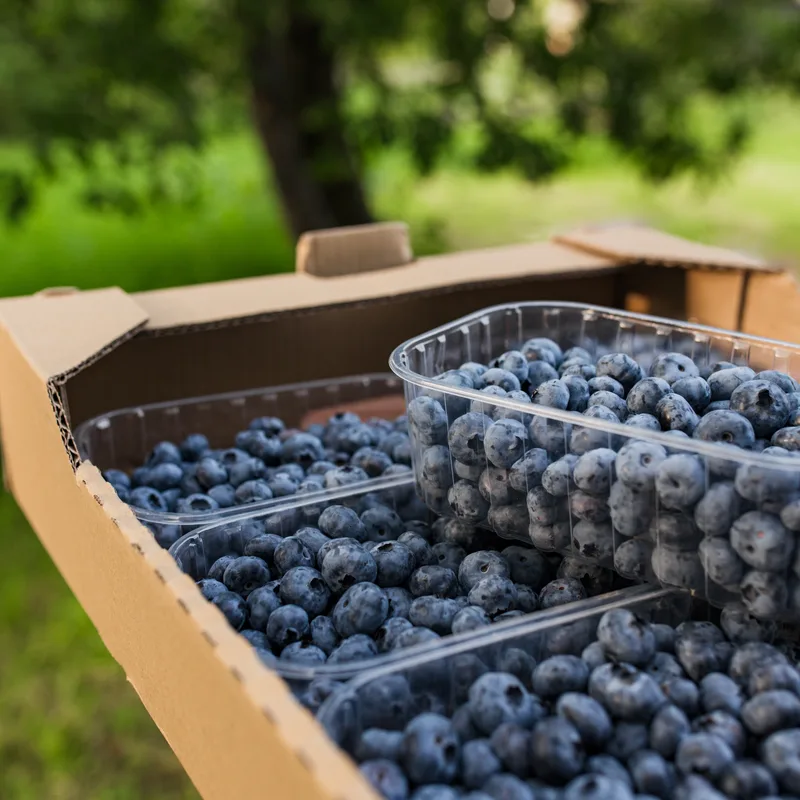
StlPak offers more than 10 existing blueberry clamshell options across different pack weights, depths, ventilation layouts, and label areas.
| Model | Pack Size | Weight | L x W x H (mm) |
|---|---|---|---|
| STL-125B1 | 4.4 oz / 125 g | 11 g | 105 x 105 x 41 |
| STL-125B2 | 4.4 oz / 125 g | 11 g | 105 x 105 x 41 |
| STL-250B1 | 8 oz / 250 g | 22 g | 210 x 110 x 38 |
| STL-340A-2 | 12 oz / 340 g | 30 g | 243 x 123 x 45.8 |
| STL-125C1 | 4.4 oz / 125 g | 16 g | 130 x 120 x 35 |
| STL-125C2 | 4.4 oz / 125 g | 16 g | 130 x 120 x 35 |
| STL-H7147 | 11 oz | 25 g | 186 x 123 x 49 |
| STL-H7345* | 18 oz | 27 g | 186 x 123 x 73 |
| STL-175M | 12 oz | 17 g | 130 x 115 x 70 |
| STL-H160 | 6 oz | 13 g | 130 x 113 x 40 |
| STL-122125* | 6 oz | 16 g | 125 x 125 x 43 |
| STL-125D | 4.4 oz | 14 g | 125 x 125 x 35 |
| STL-401U | 1 lb | 41 g | 189 x 185 x 46.8 |
| STL-403U | 1.5 lb | 43 g | 189 x 185 x 63 |
| STL-402U | 2 lb | 47 g | 189 x 185 x 78 |
| STL-200U | 250-280 g | 23 g | 180 x 124 x 35 |
| STL-200X | 250-280 g | 23 g | 180 x 124 x 35 |
An existing mold is usually the right starting point when:
- Is the target weight close to a standard pack size, such as 0.28 lb, 0.37 lb, 0.55 lb, 1 lb, or 1.1 lb?
- The average berry size fits the available container depth without pressing against the lid
- Existing ventilation, closure, and stacking performance match the expected transport route
- The project is a market test, seasonal program, or first order
- Faster sampling and lower upfront cost are priorities
For many retail and export programs, an existing PET or rPET clamshell already provides the clarity, protection, stackability, and shelf presentation the project needs.
When Labels or Automatic Labeling Are Enough
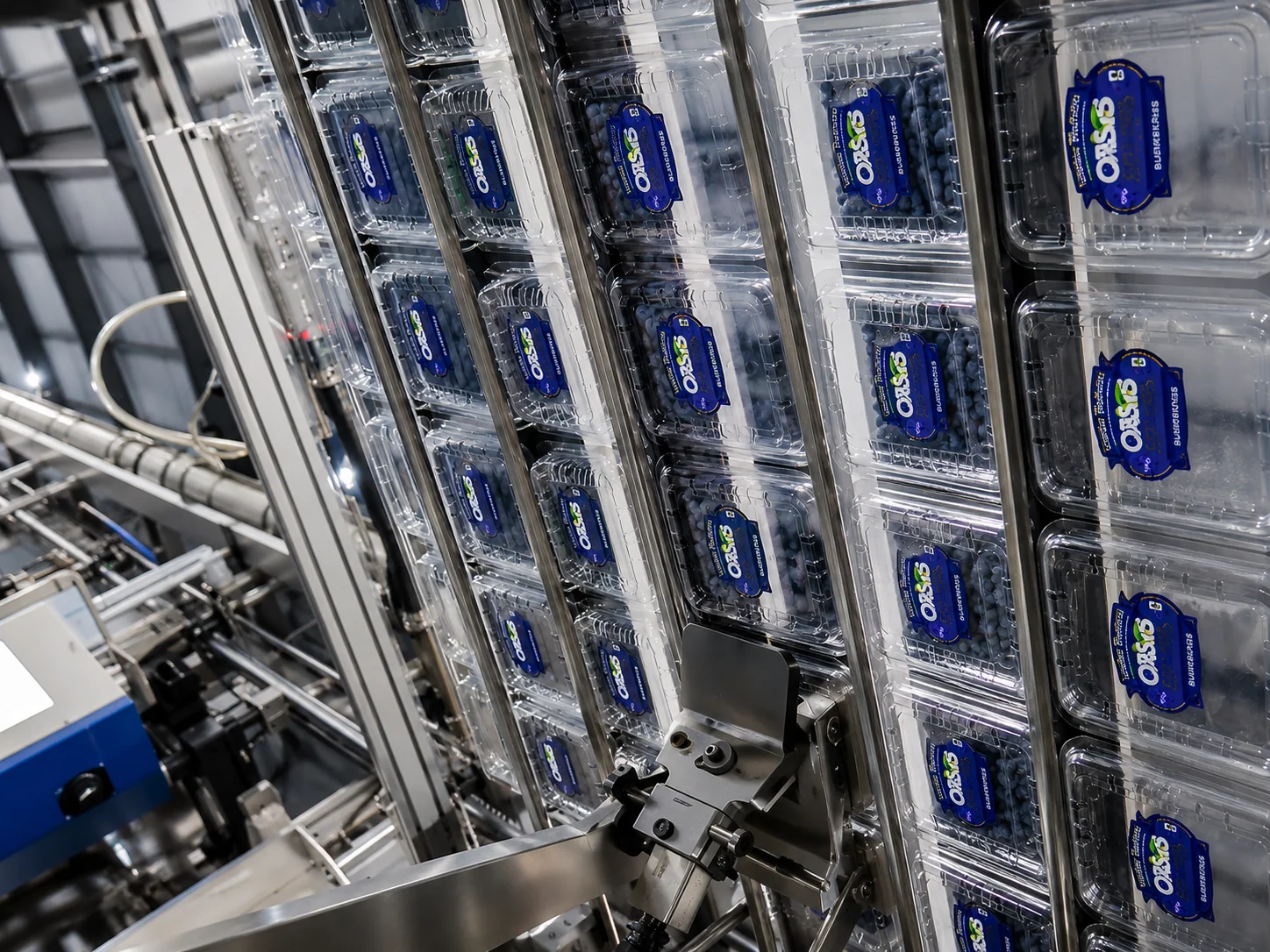
If the container already works structurally, labels are often the most flexible — and most overlooked — customization option.
Custom labels can carry:
- Brand name and logo
- Blueberry variety and origin
- Barcodes, PLU codes, and traceability information
- Nutritional information and retailer-specific graphics
- Multiple language versions for different markets
This is especially practical when the same clamshell supplies several retailers or export destinations. The container stays the same; the label changes by program.
Labels vs. automatic labeling vs. direct printing:
| Option | Best suited for |
|---|---|
| Custom labels | Multiple SKUs, seasonal programs, changing product information, multilingual requirements |
| Automatic labeling | Retail-ready projects requiring consistent label positioning and reduced manual handling |
| Direct printing | Long-term, high-volume programs with stable artwork and limited design changes |
StlPak can support custom label areas and automatic labeling for suitable projects — helping customers receive packaging that is closer to retail-ready without additional label application at their own facility. For longer-term programs, direct printing with up to eight colors is also available where quantities and artwork stability justify it.
One important limit: labels cannot fix structural problems. If the container is too shallow, has the wrong ventilation, or doesn’t stack properly, no label changes that.
When a New Mold Is Actually Necessary
A new mold is the right answer when an existing container cannot solve a real problem — not when the preference is simply a different look.
New tooling is typically necessary when:
- Required dimensions differ significantly from available options
- Blueberries are larger than standard and press against the lid in existing containers
- A different ventilation layout is needed for the cold chain or carton configuration
- Stacking loads during export transport exceed what existing structures can handle
- The closure, opening feature, or bottom structure needs to be different
- The packaging must integrate with specific automated filling, closing, or cartoning equipment
- The project requires an embossed logo, label recess, or a distinct branded container shape
- The program is long-term, high-volume, and justifies dedicated tooling investment
A Note on Jumbo Blueberries
Larger berry sizes don’t only affect pack weight — they affect container depth, headspace, lid clearance, closure performance, and shelf presentation. A clamshell sized for standard berries may be too shallow for jumbo fruit, causing pressure on the upper layer.
But simply making the container deeper isn’t always the solution either. Excessive depth can hurt fill stability, visual presentation, stacking, and carton utilization. The right container balances berry size, fill height, closure clearance, and logistics performance — not just capacity.
Packaging Engineering: What Actually Protects the Fruit
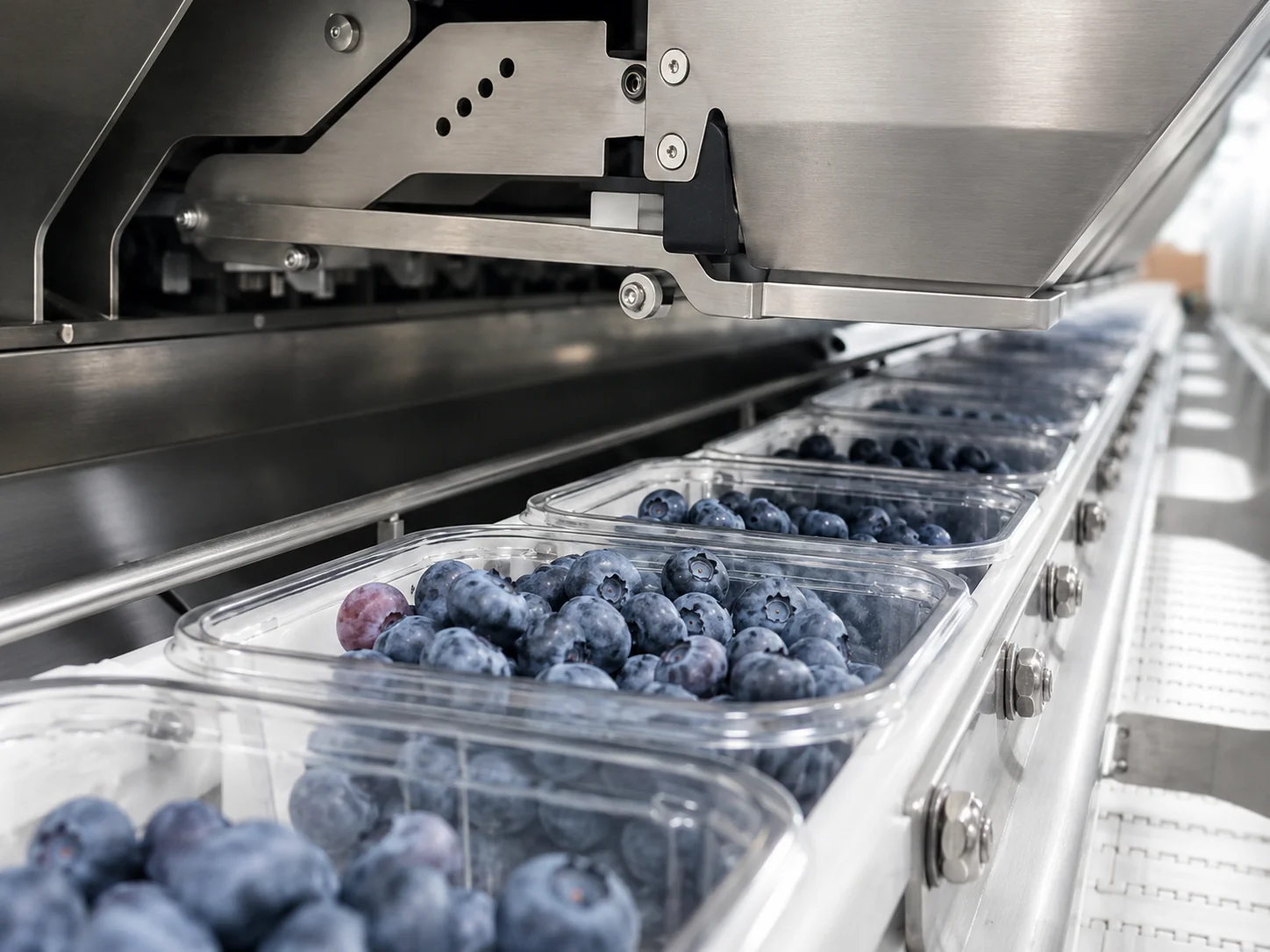
Custom or existing, the container has to function as part of a complete packing and transport system. These are the factors that matter most.
Container depth and headspace
Too little headspace crushes fruit, damages bloom, and makes closure difficult. Too much space allows movement during transport. The container depth should be matched to the actual berry size and fill height — not estimated.
Ventilation
More holes don’t automatically mean better performance. Top, side, and bottom openings perform differently depending on clamshell design, carton ventilation, packing density, and transport distance. For export programs, ventilation should be reviewed together with the outer carton configuration and pallet loading method. Excessive openings can reduce container rigidity.
Material weight, closure, and stacking
Reducing material weight is not simply a cost reduction. Lighter material can affect sidewall strength, closure stability, stacking performance, and resistance to deformation under pallet pressure. The goal is a practical balance between material use, container strength, and logistics conditions — not the lightest possible container.
Packing-line compatibility
A clamshell that works manually may behave differently on a semi-automatic or automated line. Customers using packaging equipment should confirm container orientation, denesting performance, closure consistency, labeling position, and carton loading direction before committing to a container.
PET or rPET?
Both are common options for clear blueberry packaging.
PET is typically selected for strong optical clarity, structural stability, and consistent shelf presentation.
rPET suits programs with recycled-content targets, sustainability requirements, or retailer material policies — while maintaining the transparency that blueberry retail programs generally require.
The material decision should be made together with the container structure, target market, strength requirements, and cost parameters. For projects with specified recycled-content levels, GRS requirements, or retailer material policies, confirm these requirements before finalizing the packaging specification.
Sampling, MOQ, and Production Planning
The most practical order quantity depends on what the project actually requires:
- Existing mold + labels: most flexible for market testing, seasonal buying, or lower initial volume
- Existing mold + automatic labeling or printing: suited to retail-ready programs with more stable demand
- New mold: requires investment in tooling, best justified by long-term volume and a confirmed retail or export program
Samples matter because they let you verify fruit fit, fill height, lid closure, headspace, label position, stacking, and packing-line compatibility before committing to production. For suitable projects, StlPak can arrange samples in approximately 7 days after design confirmation.
What to Share When Requesting a Quote
To assess the most suitable option, StlPak needs:
- Target pack weight
- Average blueberry diameter (or photos)
- Packing method: manual, semi-automatic, or automated
- Export route and cold-chain conditions
- Outer carton dimensions and units per carton
- Target retail market and any label language requirements
- PET, rPET, or recycled-content requirements
- Label size, placement, and artwork details
- Estimated order quantity and seasonal demand pattern
The more complete the project information, the more accurately the packaging can be evaluated before production begins.
Common Questions
Can I get custom blueberry packaging without opening a new mold?
Yes — and this is the most common outcome. Many projects are well served by an existing clamshell with custom labels, automatic labeling, or a different material. A new mold is only necessary when the existing structure cannot meet a real project requirement.
When are labels better than direct printing?
Labels are more flexible for multiple SKUs, changing information, multilingual markets, or seasonal programs. Direct printing suits stable, high-volume retail programs where artwork and product information won’t change frequently.
Does StlPak support automatic labeling?
Yes, for suitable projects. This helps customers receive more consistent, retail-ready packaging without additional label application at their facility.
When does ventilation need to be customized?
When the existing hole pattern doesn’t match the fruit, cold-chain route, carton ventilation, stacking arrangement, or transport conditions. Custom ventilation may require structural evaluation or new tooling.
How do jumbo blueberries affect packaging selection?
Larger berries require more attention to container depth, headspace, and lid clearance. Standard clamshells may not provide enough clearance without putting pressure on the top layer of fruit. This is one of the more common reasons buyers move from an existing mold toward a custom structure.
Custom development is not limited to blueberry clamshells — the same PET and rPET tooling approach applies across fruit punnets and tamper-evident food containers.
Ready to Find the Right Route?
Share your target pack weight, berry size, packing method, destination market, branding requirements, and estimated order quantity with StlPak. We’ll assess whether an existing clamshell, a labeling solution, or a new mold is the most practical option for your project — and explain why.
Ready to find the right blueberry packaging solution? Contact StlPak today for a free consultation and quote.