
Clear food packaging matters in fresh food retail because shoppers often want to see the actual product before they buy it. For blueberries, strawberries, grapes, salads, fresh-cut fruit, desserts and bakery items, appearance is part of the buying decision — consumers judge color, portion size, visible defects and overall condition without opening the pack. But choosing a transparent material is only the starting point. Haze, scratches, condensation and oversized labels can all quietly erode the visibility that clear packaging is supposed to provide. The real question for a packaging buyer isn’t “is this container clear?” It’s whether customers will still be able to see the product clearly once that container is filled, labeled, refrigerated, transported and sitting on a retail shelf.
Explore StlPak’s broader Disposable Plastic Food Containers range when comparing formats and applications.
Related guidance: PET containers for cold foods; fresh-cut fruit retail packaging.
What Shoppers Actually Look For
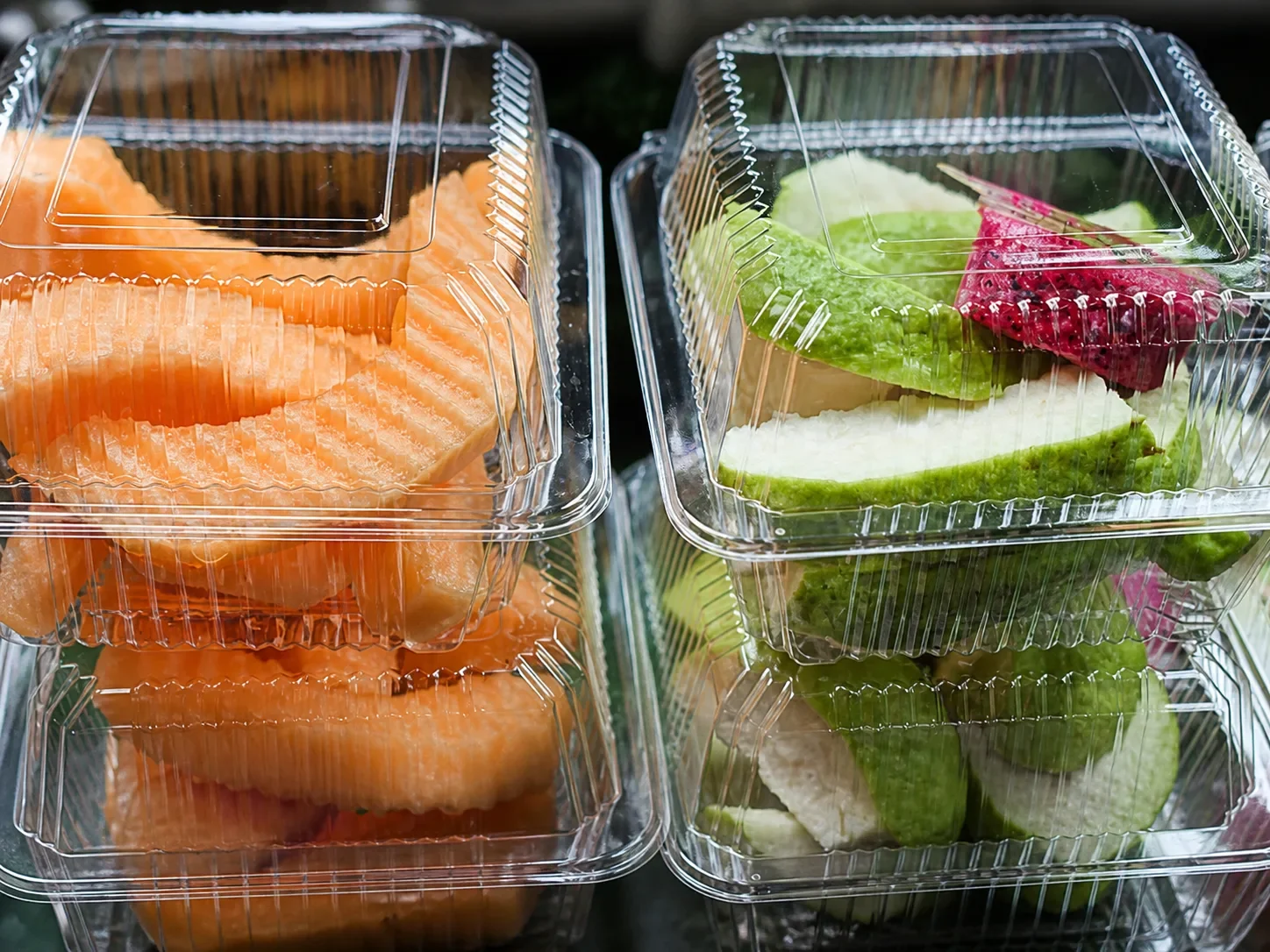
Fresh food differs from most packaged goods in one important way: consumers often judge the product itself rather than relying on the brand or the printed packaging. What they look for depends on the food.
| Product | What Shoppers Look At |
|---|---|
| Blueberries | Color, bloom, berry size, shriveling, mold, fill level |
| Strawberries | Color, bruising, mold, size consistency |
| Grapes | Berry color, stem condition, loose or damaged berries |
| Fresh-cut fruit | Browning, juice accumulation, fruit mix, portion size |
| Salad | Leaf color, wilting, moisture, ingredient distribution |
| Bakery products | Shape, toppings, decoration, portion size |
A shopper comparing two packs of blueberries usually isn’t reading the label closely — they’re comparing the berries. If one pack shows firm, evenly colored fruit and the other shows visible shriveling or damage, the packaging has already made the decision for them. For foods where appearance signals quality this directly, the food itself becomes part of the retail presentation.
Transparency Cuts Both Ways
Opaque packaging asks shoppers to trust whatever the label claims. Clear packaging gives them something better: the ability to check that claim themselves. A label can say “Premium Fresh Blueberries,” but a transparent container lets the shopper see whether the berries actually look uniform, properly filled and free of obvious damage. This doesn’t guarantee a sale — it simply removes some of the uncertainty that comes with buying fresh food, which matters most for products where appearance is already the main selling point.
The same transparency that builds confidence also exposes weakness. A clear blueberry punnet reveals mold, crushed fruit, inconsistent sizing or a low fill level just as readily as it shows off good berries. A clear grape clamshell shows brown stems or loose fruit; clear fresh-cut fruit packaging shows browning or excess juice. Clear packaging should never be treated as a way to make an average product look premium — it makes actual quality more visible, in both directions. For growers, packers and processors, that also means sorting and filling consistency becomes noticeable at the retail shelf in a way it wouldn’t be behind opaque packaging. Clear packaging works best when the product inside is genuinely worth showing.
What Actually Reduces Visibility on the Shelf
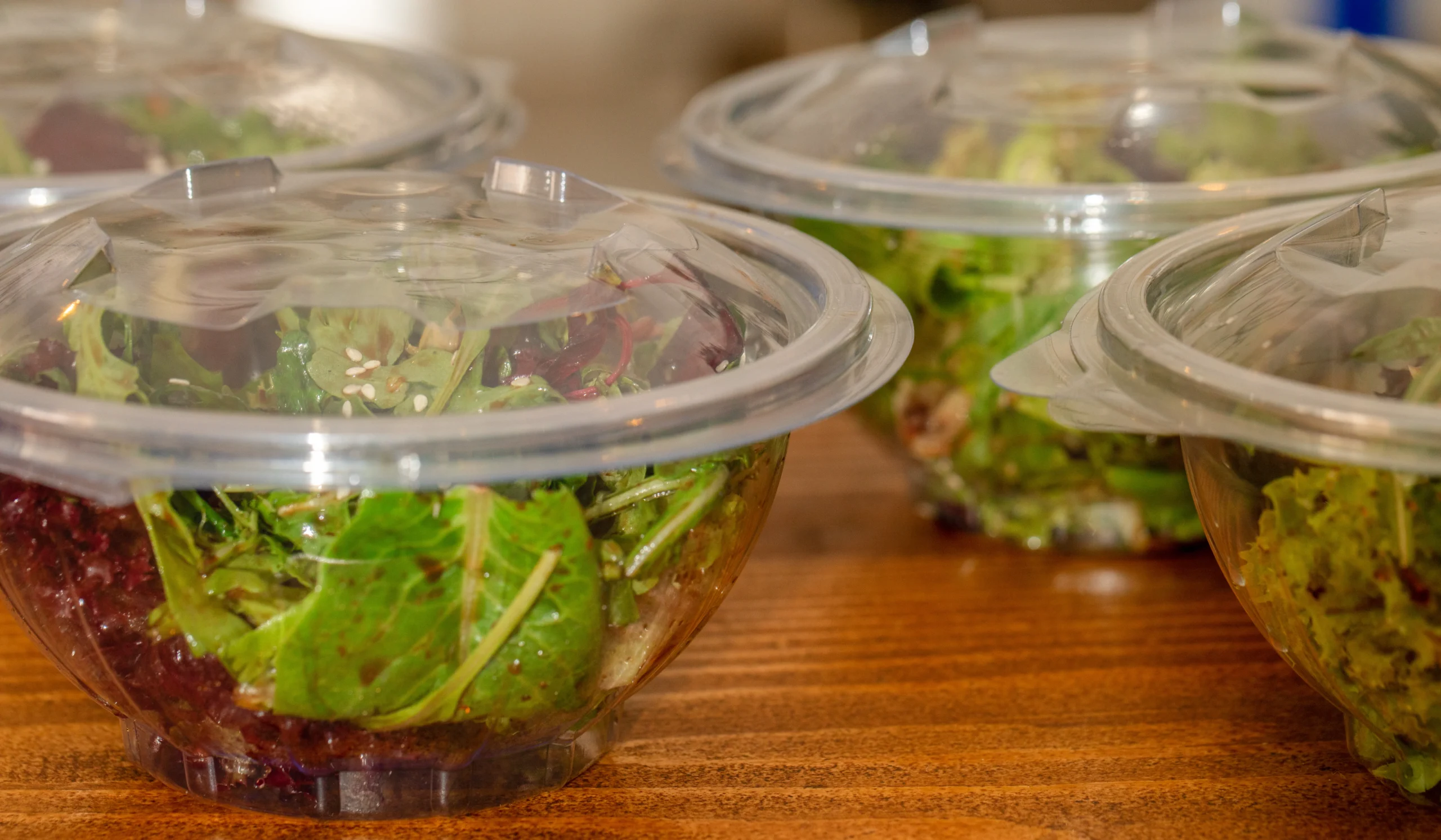
Two containers can both be labeled “clear PET” and still look completely different once they reach the shelf, because final visibility depends on more than the resin name.
| Factor | Effect on Visibility | What to Check |
|---|---|---|
| Haze / material clarity | Makes colors look less distinct, dulls the clean look shoppers expect from transparent packaging | Actual production samples, not just a “clear PET/rPET” spec sheet |
| Scratches & scuffing | Containers can rub against other packs, carton walls or handling equipment during transport | How the container looks after realistic handling, not just off the line |
| Condensation | Water droplets on the inside of a lid can obscure the product even in refrigerated cases | Performance under the actual refrigerated storage conditions the food will face |
| Label coverage | A large label over the main viewing area removes most of the benefit of a clear container | Viewing-area size, label position, barcode placement, and how much food remains visible after labeling |
Two of these deserve a closer look. On material clarity, recycled PET is a common point of confusion: rPET can offer strong transparency, but its appearance varies with recycled-content percentage, source material, filtration and processing control, sometimes showing slight differences in color, haze or visible specks compared with virgin PET. This doesn’t make rPET unsuitable for clear food packaging — it means buyers with strict retail presentation requirements should confirm acceptable finished appearance using actual samples, not approve recycled content by percentage alone. For a broader material comparison, see our Food Packaging Material Guide.
On condensation, anti-fog treatment can help — but only so far. Instead of letting moisture form large droplets that scatter light and block the view, anti-fog helps water spread more evenly across the surface, keeping the viewing area clearer. It doesn’t remove moisture from the package, though, and it can’t compensate for poor precooling, a weak package design or an unstable cold chain. Anti-fog is one part of the visibility solution, not a substitute for proper temperature and moisture management — a topic we cover in more detail in How Packaging Affects Fruit Ripening.
Label size runs into a similar trade-off. There’s no single correct label size for every clear container — it depends on how much information needs to appear and how important visibility is for that product. A large top label on a small blueberry punnet may cover most of the berries; a smaller label preserves the viewing window but still needs room for the barcode and mandatory product information. Because of this, label design shouldn’t be evaluated separately from the container — a layout that looks fine on a dieline can look very different once applied to a filled pack. The safest approach is to approve the container, the food and the label together, as one package, rather than as three separate components.
Test With the Actual Food, Not an Empty Container
One of the easiest mistakes in packaging selection is approving a container while it’s still empty. An empty PET container under office lighting can look excellent — that tells you almost nothing about how it will perform in real retail conditions. Before final approval, test the full package as it will actually be sold:
- Fill it with the real food and apply the final or representative label.
- Refrigerate it under the expected storage conditions and check whether condensation affects visibility.
- Stack and handle it the way it will be handled in distribution, then check for scratches or scuffing.
- View it under lighting similar to the retail environment.
At StlPak, we recommend this kind of sample testing before bulk production, because packaging performance should be judged on the actual food and application — not on a catalogue specification alone. For buyers evaluating larger orders, our Bulk Plastic Food Container Buyer’s Checklist covers the other factors worth confirming before you order.
Visibility Isn’t the Same as Freshness
Clear packaging helps shoppers see the condition of fresh food — it doesn’t improve that condition. A transparent container can’t correct poor precooling, unsuitable ventilation, bruising during distribution, a weak closure, incorrect storage temperature or an unstable cold chain. Visibility and freshness preservation are related, but they’re separate requirements: the package has to show the product clearly, and it also has to protect it properly through packing, transport and storage. That’s why the best clear food packaging isn’t simply the container with the highest apparent transparency — it’s the one that combines visibility, suitable structure and real application performance. At StlPak, the way we test this is straightforward: the actual food, in the actual container, with the actual label, under the conditions it will actually be sold in. That tells you far more than judging an empty clear container ever will.
FAQ
Why is clear food packaging popular for fresh food?
It lets shoppers inspect the actual product before purchase — color, portion size, visible defects and overall condition — without opening the package.
What foods benefit most from clear packaging?
Visually driven foods such as berries, grapes, strawberries, salads, fresh-cut fruit, bakery products and desserts.
Is PET suitable for clear food packaging?
Yes. PET is widely used for cold and room-temperature applications where transparency, rigidity and retail presentation matter, though it should still be matched to the intended food and temperature conditions.
Can rPET provide good transparency?
Yes, though appearance can vary with recycled-content percentage, source material and processing control. Buyers with strict visual requirements should evaluate actual production samples.
Does anti-fog stop condensation?
No. It can improve visibility when condensation occurs, but it doesn’t remove moisture from the package or replace proper precooling and cold-chain management.
Should clear packaging be tested empty or filled?
Filled. An empty package won’t show how food, labels, refrigeration, condensation and handling affect the final retail appearance — approve packaging using the actual product and expected retail conditions whenever possible.