
When buying disposable plastic food containers, one of the most basic structural questions is whether the lid is attached to the base or supplied separately. It sounds like a small detail, but it actually shapes packing speed, inventory management, lid design flexibility, and how the consumer ends up using the package — which is why it’s worth understanding before you compare any specific container models.
Explore StlPak’s broader Disposable Plastic Food Containers range when comparing formats and applications.
Related guidance: food container design guide; clamshell, tray and cup comparison.
What’s the Difference Between a Hinged Lid and a Separate Lid?
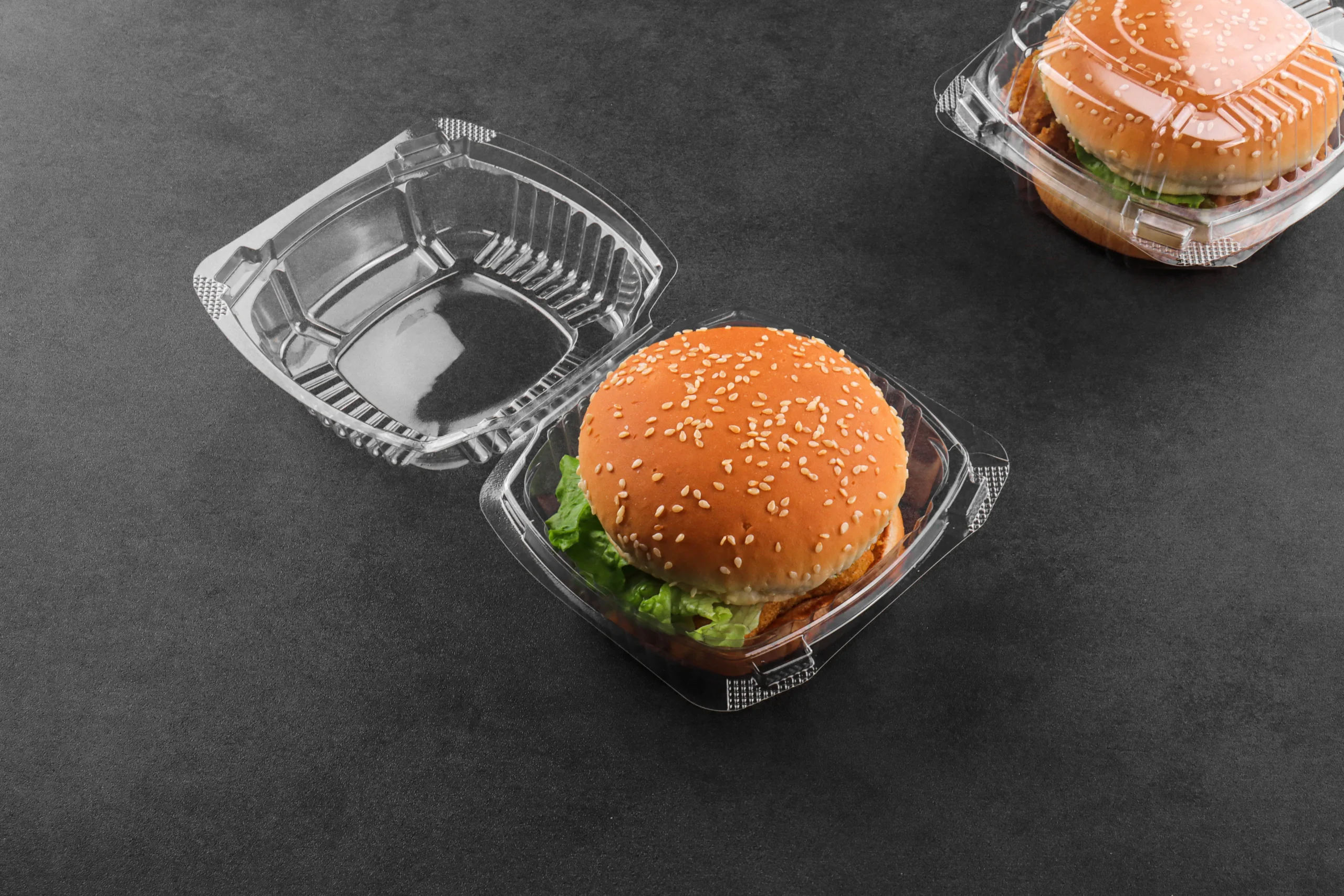
A hinged-lid food container is molded as one complete unit, with the lid connected to the base through a flexible hinge. This structure is common for hamburger boxes and takeaway clamshells, and for fruit packaging such as blueberry, grape, strawberry and tomato containers, egg cartons, some bakery containers, and many tamper-evident food containers. The practical advantage is simple: the lid is already attached, so packing becomes open → fill → close, with no separate lid to pick up and match. That’s exactly why the structure works so well in fast-food and produce packing — fewer loose components at the packing station, and a lid that stays attached even after the consumer opens the package, which matters for something like a punnet of blueberries someone wants to open, eat from, and reseal.
A separate-lid food container uses two independent parts — a base and a matching lid — and this is the more common structure for salad bowls, dessert cups, deli containers, fresh-cut fruit cups, and cake packaging. Its main advantage is design freedom: because the lid is produced independently, its height and shape can be built around the product rather than around the base. A dessert cup can use a high dome lid to leave room for cream or toppings, a salad bowl can use a flat transparent lid for simple retail display, and a cake tray can use an even taller dome to clear decoration — combinations that a one-piece hinged structure can’t easily offer, since its lid and base are locked into a single integrated shape.
Packing, Inventory, Flexibility and Consumer Use, Compared
The clearest way to put it: a hinged lid keeps the package as one unit, while a separate lid makes the package modular. That single distinction drives most of the practical differences buyers actually care about.
| Hinged-Lid | Separate-Lid | |
|---|---|---|
| Packing | Lid is already attached — pack as one motion, no matching required | Base and lid must be brought together correctly during packing |
| Inventory | Ordered and stocked as one complete unit | Base and lid quantities tracked separately |
| Lid flexibility | Lid and base are one integrated shape — can’t be changed independently | Lid height, dome shape and design can be built around the product |
| Consumer use | Lid stays attached after opening — convenient for reseal-and-go use | Lid can be fully removed — useful when the base doubles as a serving bowl |
A couple of these are worth a closer look. On inventory, ordering 20,000 hinged clamshells means managing 20,000 complete units, while ordering separate-lid packaging means tracking base and lid quantities independently — for example, 20,000 salad bowls and 20,000 matching lids. Some ranges are designed so several base sizes share the same lid, which simplifies this, but it’s worth confirming during selection rather than assuming. On packing, the separate-lid gap matters less on a well-organized or automated line, but it still means two components instead of one to manage at the station — a real factor for high-frequency packing of burgers, berries, grapes, tomatoes or eggs, which is exactly why those applications default to hinged structures.
Hinged Lid Isn’t the Same as Tamper-Evident
This distinction trips up a lot of buyers, so it’s worth stating plainly: a hinged lid only tells you the lid and base are physically connected. A tamper-evident container adds a separate feature — a breakable tab, a tear strip, a security lock, or another closure structure — that makes previous opening visible. Many tamper-evident containers happen to use a hinged-lid design, which is where the confusion comes from, but the two aren’t interchangeable. A normal hamburger box or a blueberry clamshell can have a hinged lid with no tamper-evident feature at all. StlPak’s tamper-evident food containers pair the hinged structure with an added security feature built specifically to show whether a package has been opened — so if tamper evidence is a real requirement, check the actual locking or security structure rather than assuming a hinged lid covers it. Our guide on how tamper-evident food containers work goes into the locking mechanisms themselves.
Which Should You Choose?
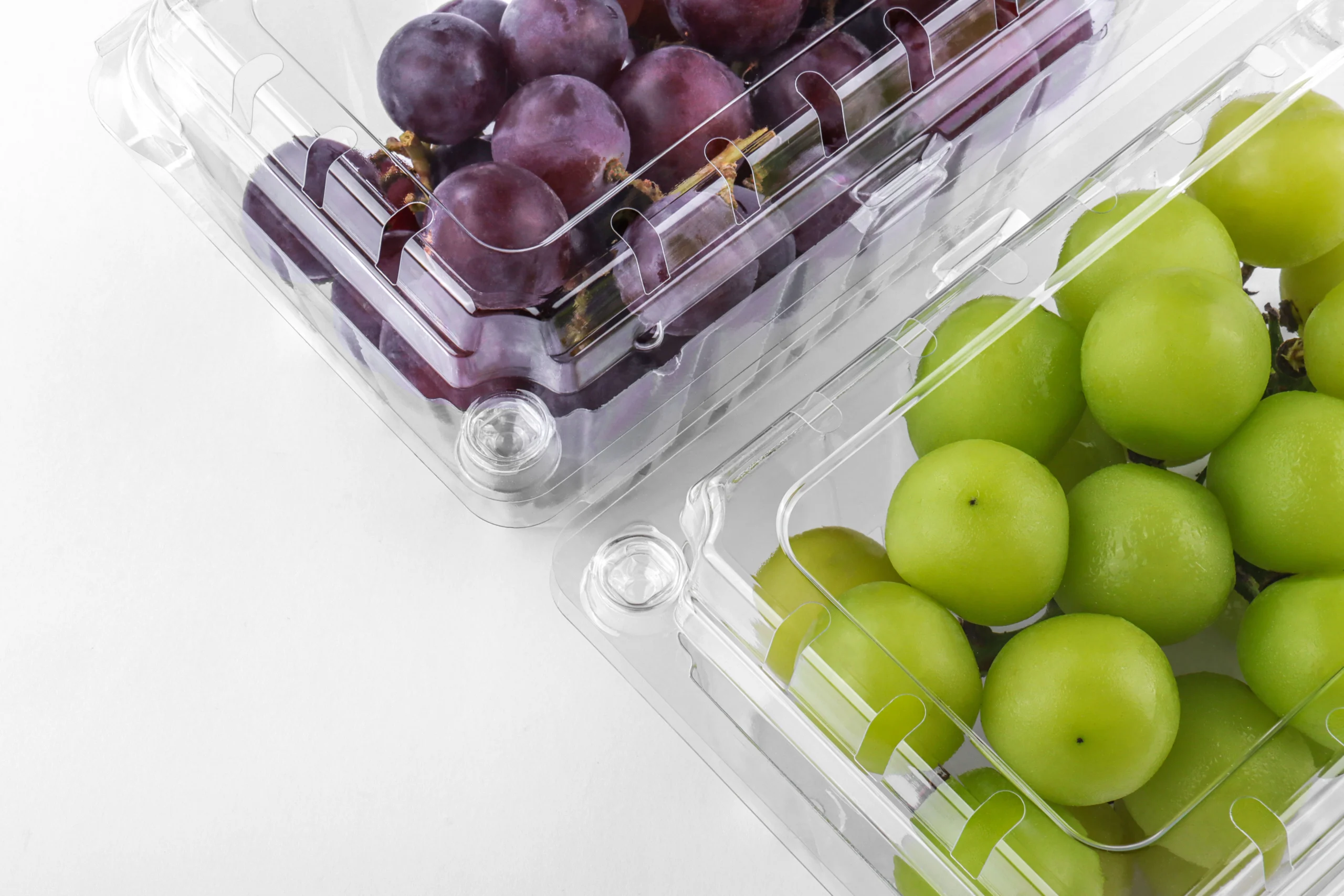
The decision usually comes down to how the food is packed, opened, and consumed. Choose a hinged-lid container when you want one-piece packaging, fast manual packing, fewer loose components, and a lid that stays attached after opening — this is why hinged structures dominate hamburger boxes, takeaway clamshells, fruit clamshells, egg cartons, and many tamper-evident containers. Choose a separate-lid container when you need a specific lid height or shape, more flexibility between lid and base, or a lid that comes off completely — the standard choice for salad bowls, dessert cups, deli containers, fresh-cut fruit packaging, and cake containers. Neither structure is better across the board; the right one follows from how the package will actually be filled, transported, displayed, and used.