
There is no single best plastic container for fresh-cut fruit. A fruit cup sold beside fresh juice, a mixed fruit salad, a Chinese-style fruit dessert, and a premium fruit platter can all contain cut fruit, yet they’re eaten differently and sold differently. For a fresh-cut fruit business, the better starting question isn’t “what container do I need?” — it’s how the customer will actually buy and eat the fruit. Once that’s clear, choosing between a fruit cup, salad container, round tray, or compartment tray gets much easier.
Explore StlPak’s broader Disposable Plastic Food Containers range when comparing formats and applications.
Related guidance: clear packaging for retail display; fruit ripening and shelf-life guide; fruit container shape guide.
Fruit Cups: Simple, and a Natural Fit Next to Juice
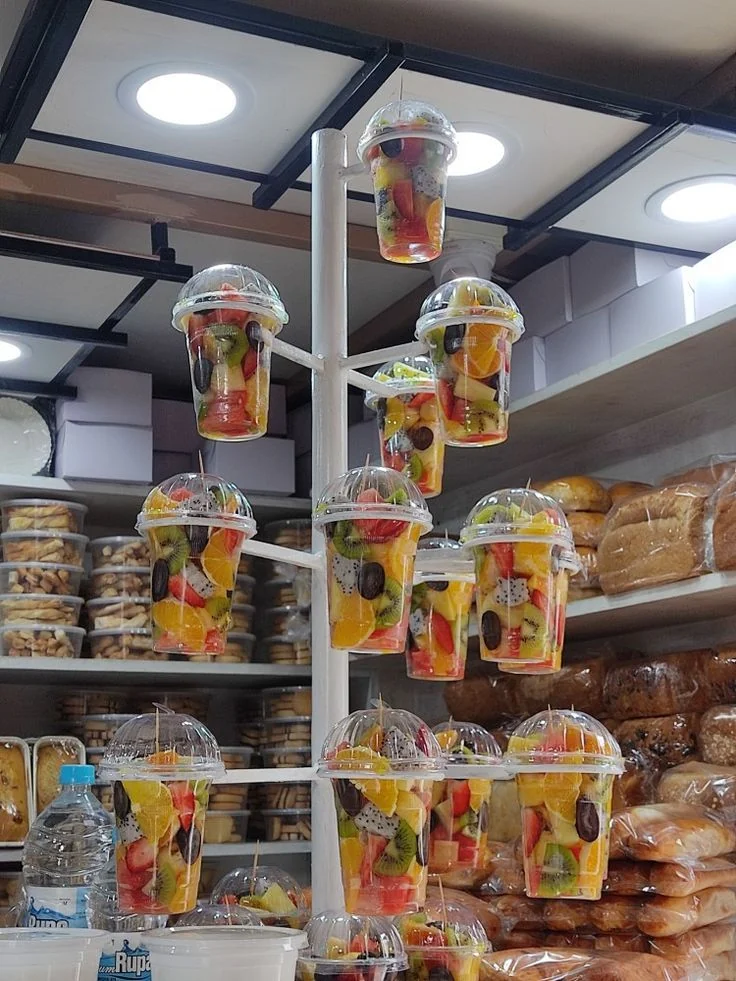
Clear PET fruit cups are one of the simplest formats for small portions of fresh-cut fruit, and they work especially well for businesses already selling fresh juice or smoothies. A juice stall can prepare cups of watermelon, pineapple, mango, dragon fruit, or mixed fruit and display them right beside the drinks — a customer buying watermelon juice can just as easily add a cup of the cut fruit itself, which turns the same fruit inventory into a second product instead of only juice. That makes fruit cups a practical fit for juice bars, smoothie shops, cafés, convenience stores, street food stalls, and grab-and-go counters generally. Part of the appeal is how little explaining a clear cup needs — the customer sees the fruit, the portion, and the color before buying, so for small servings a complicated package usually isn’t necessary; a simple clear cup with a secure lid already does the job.
Fruit Salad and Dessert Containers
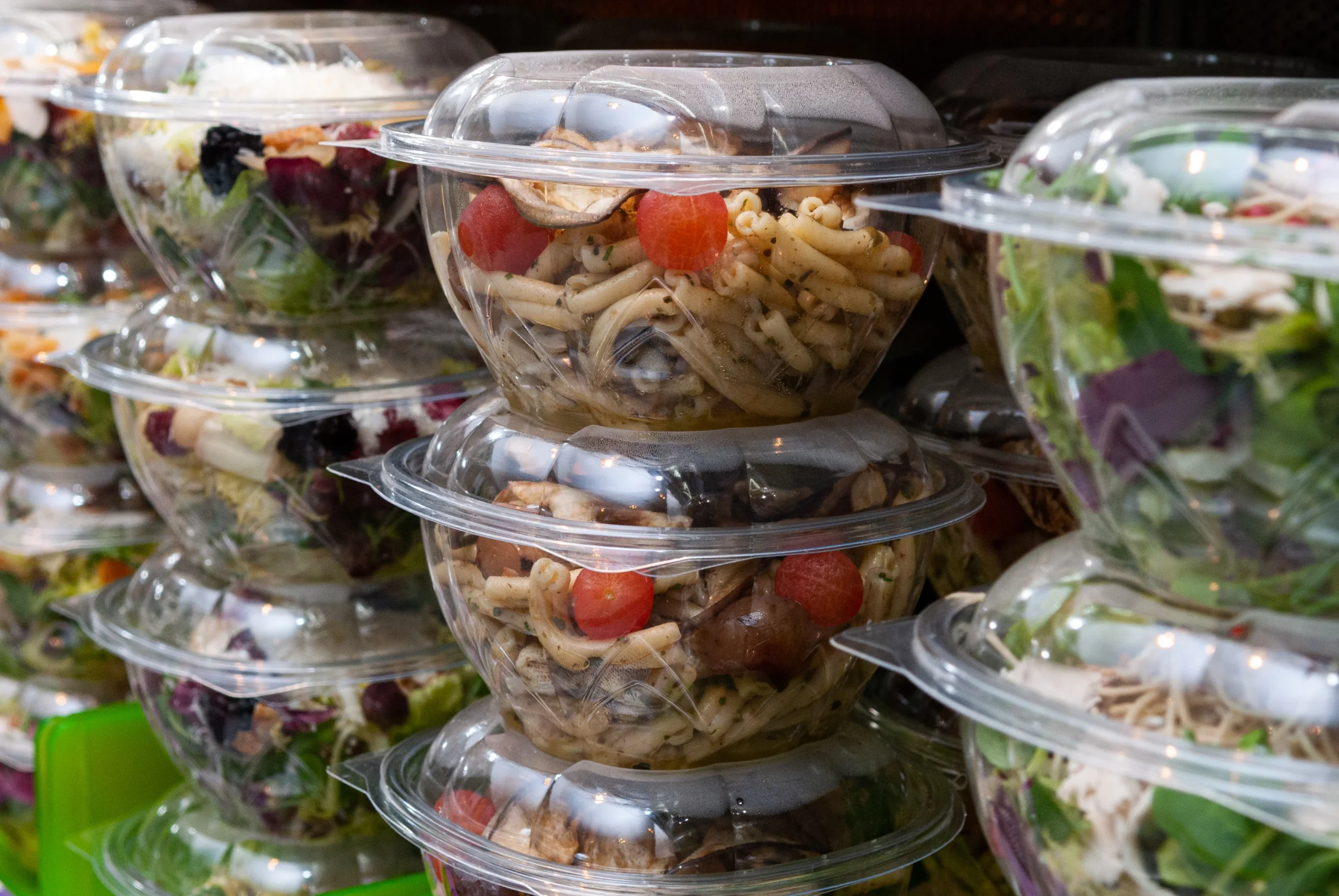
Fresh-cut fruit doesn’t have to be sold as separate pieces. Mixing different fruits into a fruit salad creates a more colorful, more attractive product when it’s shown through a clear container — and in some markets, that idea gets pushed a lot further than a basic mix.
A Chinese Example: Shui Guo Lao
In China, a popular fruit dessert known as 水果捞 (shui guo lao) mixes fresh-cut fruit — watermelon, mango, strawberry, dragon fruit, grapes, cantaloupe — with yogurt, and depending on the shop, ingredients like raisins, dried hawthorn, honey, syrup, nuts, cereal, or ice cream. What started as a box of cut fruit becomes a ready-to-eat dessert, and that’s exactly why a clear, wide-mouth salad container suits it so well: the customer can see the different colors and ingredients through the packaging, which makes presentation part of the product itself. Some shops take this further with a DIY-by-weight model — customers take a container, pick whichever fruits and toppings they want, add yogurt or a scoop of ice cream, and pay by weight. For that business model, the container isn’t just storage; it’s part of the whole buying experience, so it needs to be easy to fill and comfortable to carry around a self-serve counter.
Round Trays: Built for Sharing and Gift Presentation
Fresh-cut fruit can also be sold as a larger platter rather than an individual portion, and in China, round fruit trays are the common format for this — especially when the fruit is meant for sharing or bringing to someone else’s home. Strawberries, mango, kiwi, grapes, watermelon, and other seasonal fruit get arranged in a circle by color, and the result looks much more like a prepared gift than an ordinary takeaway box. The round shape carries a cultural association in China with completeness and reunion — 圆满 (yuan man) — which is why round platters show up for visiting friends, family gatherings, hospital visits, and holiday gifts. The buyer isn’t just purchasing something to eat immediately; they’re often purchasing something to carry or give. The trade-off is separation: when several fruits sit together in one open tray without full dividers, juice can travel between sections, and strong-flavored or juicy fruit can affect its neighbors. For a product built around visual presentation, that’s often an acceptable trade-off — but when a buyer wants every fruit type to stay completely independent, a different structure works better.
Compartment Trays: When Separation Actually Matters
This is where compartment trays earn their place. Compared with the round mixed trays common in China, many overseas buyers who work with StlPak focus on one specific detail: are the compartments actually separated from each other, or do they just look separated? A tray with several visible sections doesn’t guarantee real separation — if the dividing walls are too low, or the compartments connect at the base, juice from watermelon or pineapple can still reach the grapes or berries next to it, which defeats the point of choosing a compartment format in the first place. A properly designed compartment tray keeps different fruit varieties apart, stops juice from migrating between sections, and keeps portions and presentation clearly defined — useful for a premium assortment like strawberry, blueberry, mango, and grape each in its own section, or for combining fruit with nuts, dried fruit, granola, or other toppings without everything running together. StlPak’s FG-2, FG-3, and FG-4 fresh-cut fruit tray series are built around exactly this kind of application, offering 2-, 3-, and 4-compartment options for different combinations — though the point of adding compartments was never to make the tray look more complex, it’s whether the separation actually matches what’s being packed.
Choosing Based on How the Fruit Will Be Sold
The easiest way to choose is to start with how you plan to sell the fruit, not with the container itself.
| Fresh-Cut Fruit Business | Suitable Packaging Direction |
|---|---|
| Juice stall or smoothie shop | Clear PET fruit cup |
| Small grab-and-go portion | Fruit cup or compact container |
| Fruit salad | Clear salad container |
| Yogurt + fruit + toppings | Wide clear salad/dessert container |
| DIY fruit-by-weight shop | Clear container with easy filling |
| Sharing or gift-style platter | Round fresh-cut fruit tray |
| Premium mixed fruit | Compartment fruit tray |
| Fruit that shouldn’t mix flavors or juice | Fully separated compartment tray |
A juice stall doesn’t need an elaborate four-compartment tray, and a gift platter usually looks better in one large round container than in several small cups — while a premium fruit assortment may need real compartment separation so watermelon juice never reaches the strawberries. That’s the whole reason there’s no universal “best” fresh-cut fruit container. Instead of asking a supplier for a “500 ml fruit container,” it’s far more useful to tell them what fruit you’re packing, how it will be sold, whether the fruit will be mixed, and whether any sections need to stay completely separate — from there, it becomes much easier to shortlist an existing mold and test it with the actual product before ordering.