
Blueberries require packaging that protects, displays, and distributes efficiently. The right format isn’t just about holding fruit—it must align with your berry size, packing line, labeling, carton dimensions, pallet configuration, and transport route.
At StlPak, we provide food-grade PET and rPET containers designed for retail display, packing-line efficiency, and export distribution. Our solutions help you choose packaging that protects berries while integrating seamlessly with your entire supply chain.
Common Blueberry Packaging Formats
| Format | Best For | Key Consideration |
|---|---|---|
| Clamshell | Standard supermarket & export | Closure strength, ventilation, depth vs. berry size |
| Top-Seal Punnet | Automated lines & branded retail | Tray, film, sealing equipment must work as a system |
| Tamper-Evident | Security-conscious retailers | Secure in transit, easy to open |
| Family Pack (400g+) | Club stores & promotions | Stronger structure, carton support |
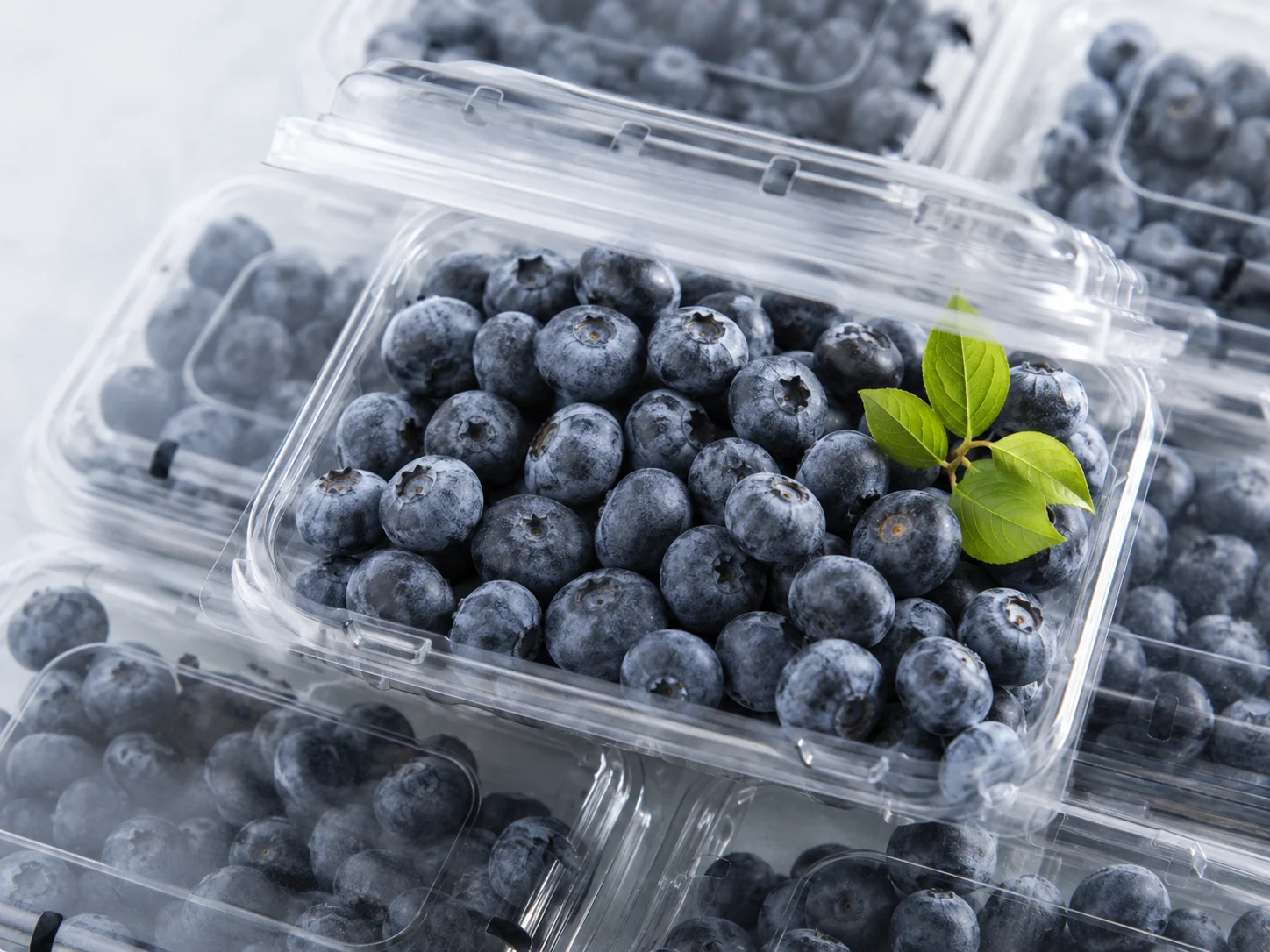
Clamshells offer the most versatility for retail programs, combining integrated closure, full visibility, and practical stacking in a familiar consumer format.
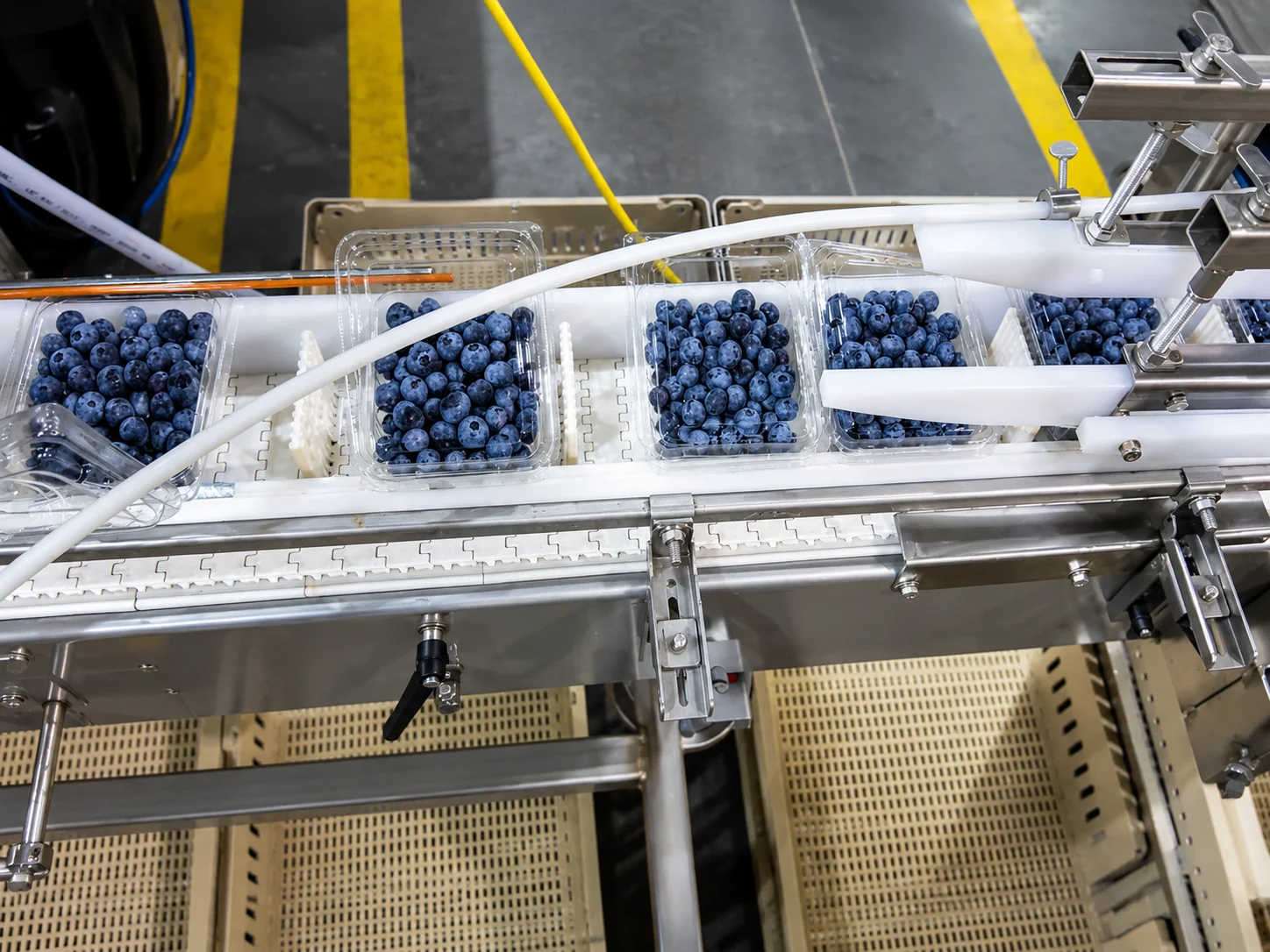
Top-seal punnets excel in high-speed automated environments and premium retail displays but require system-level matching of tray, film, and sealing equipment.
For tamper-evident needs, specialized containers provide consumer confidence. Larger family packs demand extra attention to structural integrity and pallet loading.
At StlPak, we offer existing clamshell and punnet formats for evaluation before custom development, reducing time-to-market when suitable molds are available.
How to Select the Right Blueberry Container
Follow this decision sequence for optimal results:
1. Start with Sales Channel
Specialty supermarket — Prioritize label space and shelf appeal
Standard supermarket — Require consistent dimensions and fast replenishment
Export — Demand closure reliability, carton fit, pallet stability, and route-specific handling
2. Match Container to Berry Size & Weight
Common retail sizes: 125g, 170g, 250g, 500g.
Critical: Always test with real fruit samples. Large berries need more depth; smaller berries settle differently.
At StlPak, we evaluate containers based on berry diameter, target fill level, and presentation requirements.
3. Plan Labeling Before Finalizing Container
Top labels, side labels, barcodes, private-label artwork, traceability codes—all label dimensions and positions must be confirmed during container selection, not after.
StlPak supports label-ready formats and automatic labeling requirements.
4. Evaluate Closure, Ventilation & Stackability Together
A closure that works for local delivery may fail under export conditions. Ventilation must integrate with your cold-chain system. Consider hole placement, container depth, stacking design, and carton arrangement as a unified system.
5. Finalize Material Last
PET and rPET are both viable. Confirm retailer requirements, recycled content targets, food-contact documentation, and structural needs first.
Don’t let unit price drive this decision. A cheaper container that doesn’t match your line, labels, or route creates higher downstream costs through damage, inefficiency, or complaints.
Retail vs. Export: Key Differences
| Priority | Retail | Export |
|---|---|---|
| Primary Goal | Shelf presentation & consumer convenience | Protection across multiple handling points |
| Focus | Label placement & branding | Secure closure & structural stability |
| Weight Consideration | Standard pack weight | Carton fit & pallet configuration |
| Timeline | Short delivery cycle | Cold-chain compatibility over distance |
For export, evaluate the entire system—retail container, outer carton, and pallet configuration together. A container that passes individual tests may perform differently under sustained pallet loads in refrigerated conditions.
StlPak recommends testing with actual fruit, target pack weight, carton count, and expected transport arrangement—not just selecting from a catalog.
What Packaging Can (and Cannot) Do
Packaging CAN:
- Reduce handling damage
- Support stacking
- Provide labeling space
- Improve shelf consistency
- Integrate with filling, sealing, and weighing operations
Packaging CANNOT:
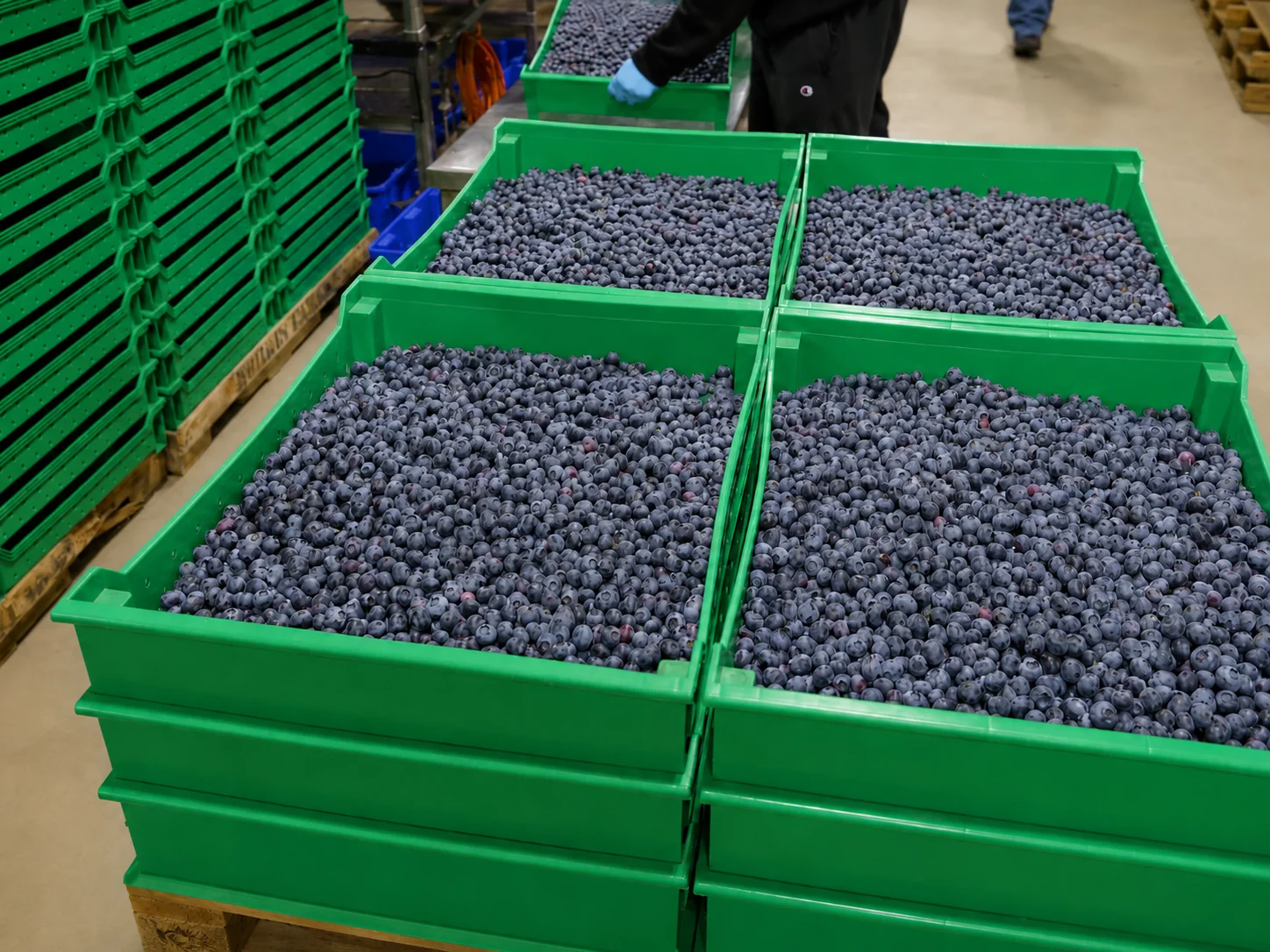
- Improve fruit quality
- Replace rapid pre-cooling
- Correct cold-chain failures
- Eliminate condensation/mold risk alone
Packaging protects good fruit—it doesn’t rescue poor fruit. Address upstream issues (delayed cooling, temperature breaks, rough handling) before expecting packaging to solve them. The container’s role is to protect berries, maintain presentation, and reduce handling risks throughout the supply chain.
Pre-Order Checklist
Before bulk ordering, confirm:
- Target retail market and sales channel
- Pack weight and actual berry size (tested with samples)
- Container format: clamshell, top-seal, or tamper-evident
- Label type, size, and position
- PET or rPET material requirement and food-contact documentation
- Packing process: manual, semi-automatic, or automated
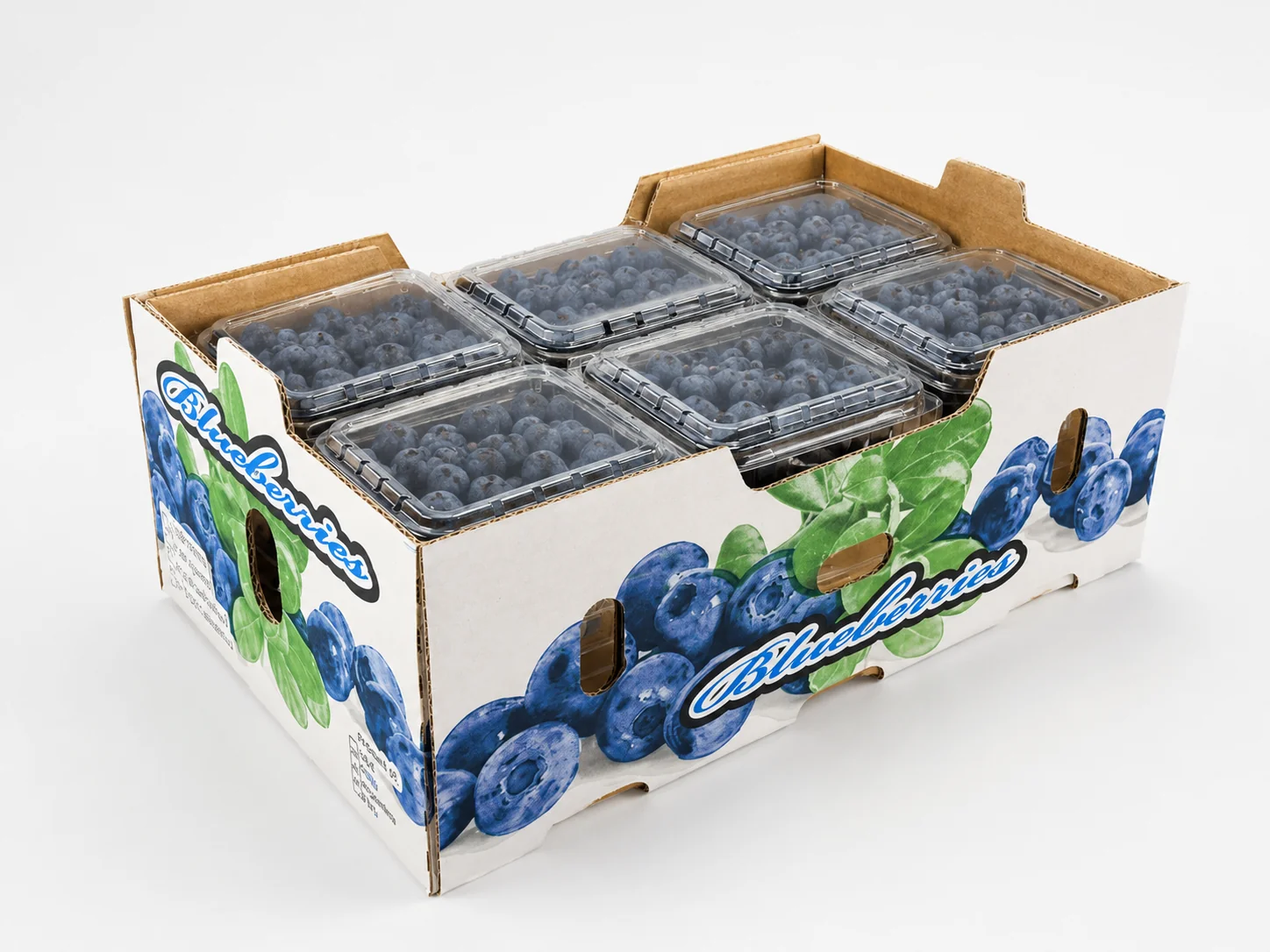
- Carton dimensions and packs per carton
- Pallet configuration and export route
- Sample testing completed with real fruit
A strong brief includes berry size, target market, pack weight, packing line, label format, carton count, and transport plan—not just “a 125g blueberry box.”
With this information, StlPak helps you review suitable formats, assess compatibility, and determine whether standard or custom packaging is best.
Quick FAQ
What’s the best packaging for fresh blueberries?
There’s no single best format. The right choice depends on pack weight, berry size, sales channel, label requirements, packing line, carton configuration, and transport route.
Clamshell or top-seal punnet?
Clamshells offer integrated closure, visibility, and stackability. Top-seal punnets suit automated lines and premium displays. Choose based on your operation first, then presentation needs.
What are common retail pack sizes?
125g, 170g, 250g, and 500g. Larger formats work for family packs, promotions, and club-store programs.
Can clamshells be used for export?
Yes, but evaluate them with the outer carton, stack height, pallet configuration, and full transport route as a complete system. See our clamshell packaging guide for more details.
Can containers support automatic labeling?
Yes. Many StlPak containers feature dedicated areas for top/side labels, barcodes, and private-label applications. Confirm label size and equipment compatibility before ordering.
Does StlPak offer rPET blueberry packaging?
Yes. We provide food-grade PET and rPET options for retail and export. Material selection depends on target market, retailer requirements, and performance needs.
Can StlPak create custom blueberry packaging?
Yes. We support custom depths, label areas, ventilation, closure styles, and retail needs. Existing molds can be reviewed first to reduce development time. Contact us with your requirements.
Need help?
Share your target pack weight, berry size, retail market, labeling requirements, carton configuration, and export route with StlPak. We’ll help evaluate the best format before bulk production. Contact us to get started.