

StlPak Meat Packaging Trays Manufacturer
“StlPak manufactures clear and black meat packaging trays for fresh meat, poultry, seafood, supermarket repacking and refrigerated retail display. Our range covers shallow trays for sliced meat and fish fillets, medium-depth trays for steaks and poultry portions, deeper trays for meat rolls and larger cuts, as well as selected tray-and-lid and hinged formats.\n\nA suitable meat tray should do more than hold the product. It needs to keep portions arranged neatly, remain stable during weighing and wrapping, provide space for an absorbent pad where required, and support clean presentation throughout chilled storage and retail display. StlPak offers different tray sizes, depths, colors, material weights and carton-loading options to support these requirements.\n\nFor supermarket and branded retail programs, we can also support label application and automatic labeling solutions. Where an existing format is not suitable, selected projects can be evaluated for adjustments to tray depth, material weight, color or other structural details.\n\nWhether you need a practical stock tray for supermarket portion packing or a more tailored solution for meat processing and distribution, our team can help recommend suitable options and arrange samples for evaluation.”
Buyers can also review our broader range of bulk plastic food containers for complementary tray and lidded formats.
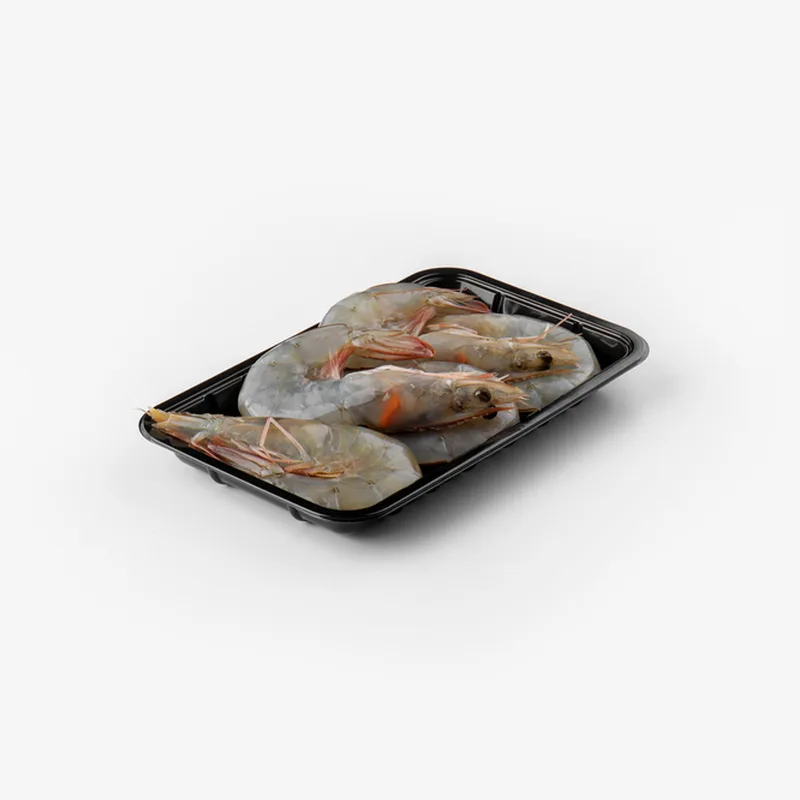
Meat Packaging Tray Specifications
| Product No. | Tray Type | L x W x H (mm) | Carton (mm) | Qty/CTN | Weight |
|---|---|---|---|---|---|
| STL-2620 | Meat Packaging Tray | 260 x 200 x 65 mm | 600 x 530 x 400 mm | 400 pcs/ctn (100 x 4) | 47 g |
| STL-23163 | Meat Packaging Tray | 235 x 160 x 30 mm | 480 x 475 x 330 mm | 800 pcs/ctn (100 x 8) | 40 g |
| STL-23164 | Meat Packaging Tray | 235 x 160 x 40 mm | 480 x 475 x 330 mm | 800 pcs/ctn (100 x 8) | 44 g |
| STL-231638 | Meat Packaging Tray | 240 x 165 x 48 mm | 490 x 315 x 335 mm | 400 pcs/ctn (100 x 4) | 53 g |
| STL-2175 | Meat Packaging Tray | 220 x 170 x 75 mm | 660 x 400 x 345 mm | 300 pcs/ctn (100 x 3) | 32 g |
| STL-1912 | Meat Packaging Tray | 190 x 120 x 30 mm | 580 x 390 x 245 mm | 1,600 pcs/ctn (100 x 16) | 8 g |
| STL-2015 | Meat Packaging Tray | 200 x 150 x 20 mm | 520 x 310 x 205 mm | 1,000 pcs/ctn (100 x 10) | 14 g |
| STL-1910 | Meat Packaging Tray | 190 x 100 x 25 mm | 600 x 390 x 220 mm | 2,000 pcs/ctn (100 x 20) | 8 g |
| STL-2316 | Meat Packaging Tray | 230 x 160 x 32 mm | 490 x 330 x 240 mm | 600 pcs/ctn (100 x 6) | 16 g |
| STL-200-130P | Meat Packaging Tray | 200 x 130 x 28 mm | 530 x 270 x 205 mm | 1,000 pcs/ctn (100 x 10) | 13 g |
| STL-1414P | Meat Packaging Tray | 137 x 127 x 20 mm | 510 x 280 x 145 mm | 800 pcs/ctn (100 x 8) | 8.5 g |
| STL-2013A | Meat Packaging Tray | 200 x 130 x 25 mm | 630 x 400 x 270 mm | 2,000 pcs/ctn (100 x 20) | 11 g |
| STL-2518P | Meat Packaging Tray | 250 x 180 x 31 mm | 375 x 360 x 260 mm | 600 pcs/ctn (100 x 6) | 25 g |
| STL-1912A | Meat Packaging Tray | 190 x 120 x 20 mm | 510 x 390 x 250 mm | 2,000 pcs/ctn (100 x 20) | 8 g |
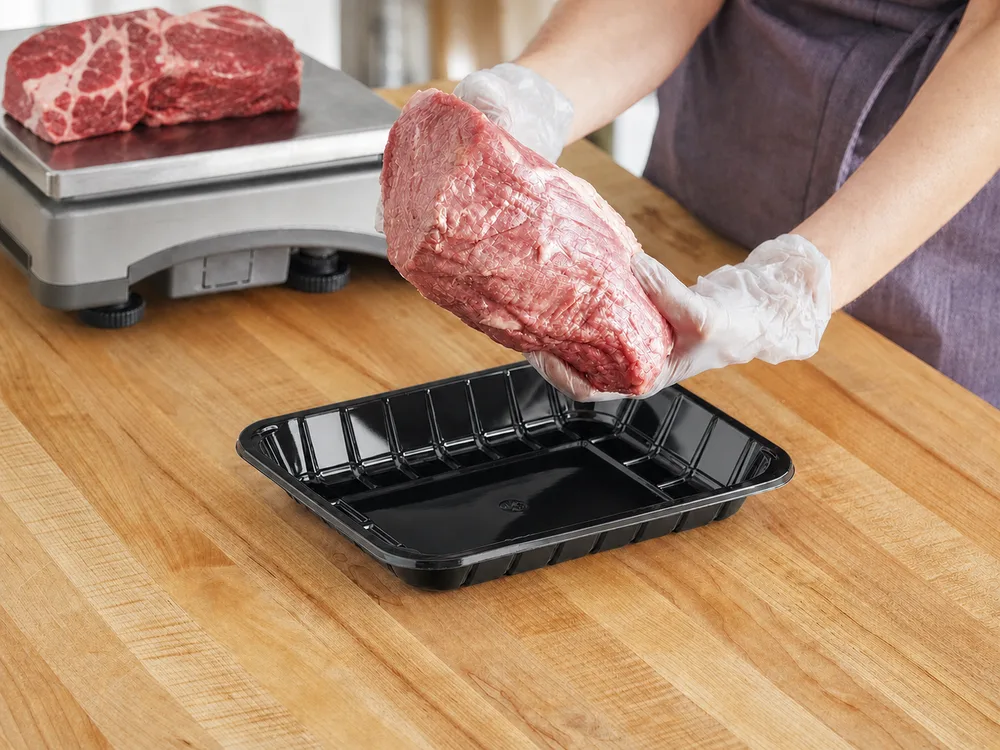
Right Meat Tray Fit for Easier Portioning
”
A suitable meat packaging tray should hold the target portion neatly without pressing the product against the film or leaving excessive empty space. The same portion weight may require different tray depths depending on the meat cut, product thickness, arrangement and absorbent pad.<\/p>
If the tray is too shallow, the product may touch the film or become difficult to wrap evenly. If it is too deep or too large, the portion may look undersized on the retail shelf and occupy unnecessary carton and display space.<\/p>
StlPak helps customers choose suitable tray sizes based on product type, portion weight, usable tray area, depth and packing method, making daily portioning, weighing and wrapping easier for supermarket and processing staff.<\/p>”
Meat Trays for Wrapping, Handling and Chilled Display
”
Meat packaging trays should remain stable during filling, weighing, overwrapping, labeling, carton loading and refrigerated display.<\/p>
Tray rigidity, rim structure, sidewall strength and nesting design all affect packing efficiency. A tray that bends easily may slow down wrapping or make the finished package look uneven, while trays that nest too tightly can be difficult for staff to separate during high-volume packing.<\/p>
StlPak offers different meat tray structures for overwrapped packs, separate-lid packs and selected hinged formats, helping customers evaluate suitable options based on their packing process, portion weight and distribution requirements.<\/p>”
Stock Molds, Colors and Custom Meat Tray Options
”
A meat tray project does not always require a new mold. In many cases, an existing tray size can already meet the required portion weight, usable area, depth and packing method.<\/p>
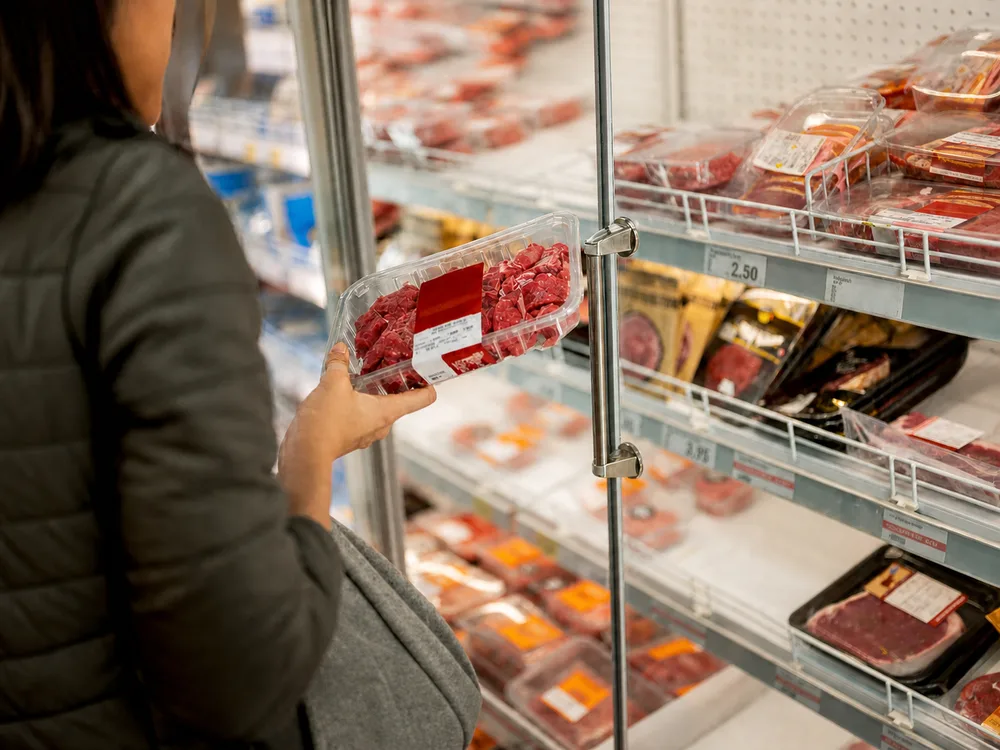
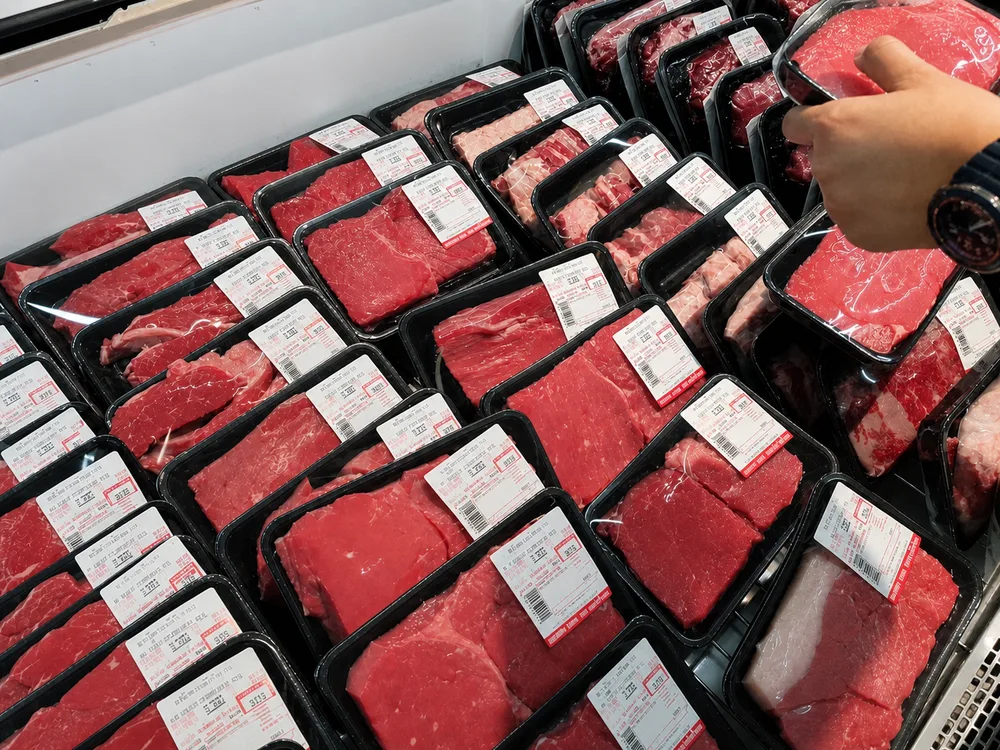
StlPak offers stock meat tray molds in different shallow, medium and deep formats, with selected models available in clear or black. Different formats can be used for sliced beef, pork, poultry, fish, seafood, meat rolls and other chilled food applications.<\/p>
When existing molds cannot meet the required dimensions, depth, material weight or tray structure, StlPak can evaluate custom development based on the project quantity and technical requirements.<\/p>”
Meat Packaging Tray Sample Support Before Bulk Orders
”
Choosing a meat tray only from catalog dimensions is not enough. The sample should be tested with the actual meat portion, absorbent pad, wrapping film, label and carton arrangement before confirming the final packaging.<\/p>
To recommend suitable samples, StlPak usually reviews the product type, target portion weight, product dimensions, tray depth, color, wrapping method, pad requirements and carton-loading needs.<\/p>
This helps customers avoid selecting trays that are too shallow, too flexible or too large, and allows supermarket or processing staff to test the tray under their actual packing conditions.<\/p>”
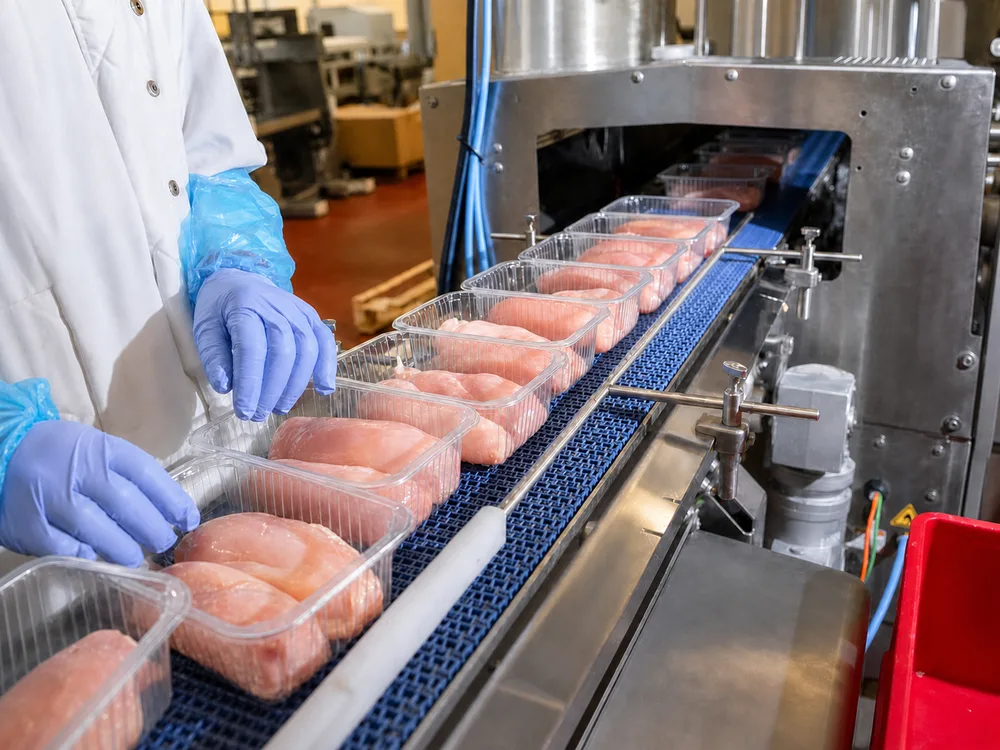
How to Choose the Right Meat Packaging Tray
”
Choosing a meat packaging tray is not only about checking the outside dimensions in a specification table. Buyers should also compare the usable base area, internal depth, tray rigidity, rim structure, absorbent pad space, wrapping method and carton loading.<\/p>
A shallow tray may be suitable for sliced meat, steaks or fish fillets, while poultry portions, shellfish and meat rolls may require more depth. The tray should provide enough room for the product without making the finished pack appear underfilled.<\/p>
Buyers should also confirm whether the tray will be used with stretch overwrap, a separate lid or another packing system. Tray structure, film, absorbent pad, sanitation and cold-chain temperature should be evaluated together because the tray alone does not determine product shelf life.<\/p>
StlPak helps buyers compare existing meat packaging tray models based on real packing use, not only catalog size. This makes it easier to narrow down suitable options before requesting samples or confirming a bulk order.<\/p>”
“For most supermarket and refrigerated retail programs, a stable food-grade meat tray used with suitable overwrap film or a transparent lid is a practical option. The tray should match the portion size, provide enough space for an absorbent pad where required, remain stable during weighing and wrapping, and present the product neatly in the chilled display.”
“StlPak meat packaging trays can be evaluated for fresh beef, pork, poultry, fish, seafood, sliced meat, steaks, sausages, meat rolls and other chilled food portions. The suitable model depends on the product dimensions, portion weight, liquid release and packing method.”
“The tray should be selected according to the usable base area, product thickness, target portion weight and required headspace. Shallow trays are generally suitable for sliced meat, steaks and fish fillets, while chicken portions, shellfish, meat rolls and thicker cuts usually require deeper trays. The finished pack should look full without pressing the product against the wrapping film or lid.”
“Many StlPak open meat trays can be used for supermarket overwrap applications. However, buyers should test the tray with their actual film, wrapping machine and product portion because tray rigidity, rim design and film tension can affect wrapping performance.”
“Yes. An absorbent pad can be placed inside the tray when there is enough usable space for both the pad and the meat portion. The pad size and absorbency should be selected according to the product type, portion weight and expected liquid release. The complete tray, pad and product combination should be tested before confirming a bulk order.”
“Yes. Selected meat tray models are available in clear and black. Black trays provide stronger visual contrast for meat and seafood displays, while clear trays allow the product to be viewed from more angles. Availability depends on the tray model, material specification and order quantity.”
“Yes. StlPak has existing meat tray molds covering different footprints, depths and container structures. Buyers can provide their product type, portion weight and packing method, and our team will recommend suitable stock options. Samples can also be arranged for testing with the actual meat portion, absorbent pad, film, label and carton.”
“Yes. Where existing molds cannot meet the required dimensions, depth, material weight, color or structural requirements, StlPak can evaluate adjustments or custom mold development. Custom feasibility depends on the project quantity, material requirements, packing method and technical specifications.”
“Different meat tray models can usually be combined in one container shipment, provided each model meets the applicable minimum order quantity and production requirements. Because tray sizes, carton dimensions and loading quantities vary, StlPak will calculate the container-loading plan before the order is confirmed.”
Meat Packaging Trays
See rigid food trays designed for meat, chilled foods and supermarket fresh displays.