
Choosing the right egg packaging is not only about how many eggs it can hold. For egg farms, supermarkets, distributors, wholesalers, and private-label brands, a good egg package should protect the eggs, fit the egg size, close securely, stack well, and present the product clearly on the shelf.
This guide focuses on PET egg packaging, plastic egg containers, plastic egg trays, and clear plastic egg cartons from 6 to 30 eggs. These thermoformed plastic egg packaging solutions are widely used for retail display, supermarket supply, farm packaging, wholesale distribution, and export transportation.
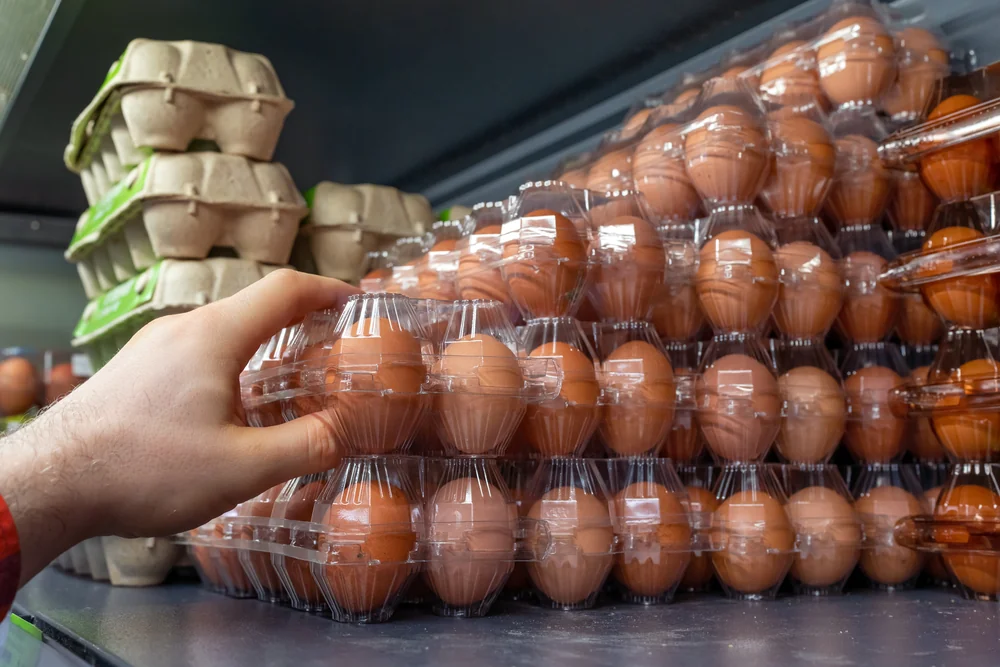
Compared with traditional pulp egg trays, clear PET egg packaging provides better product visibility. Customers can see the eggs directly without opening the package, which helps improve retail trust and product presentation.
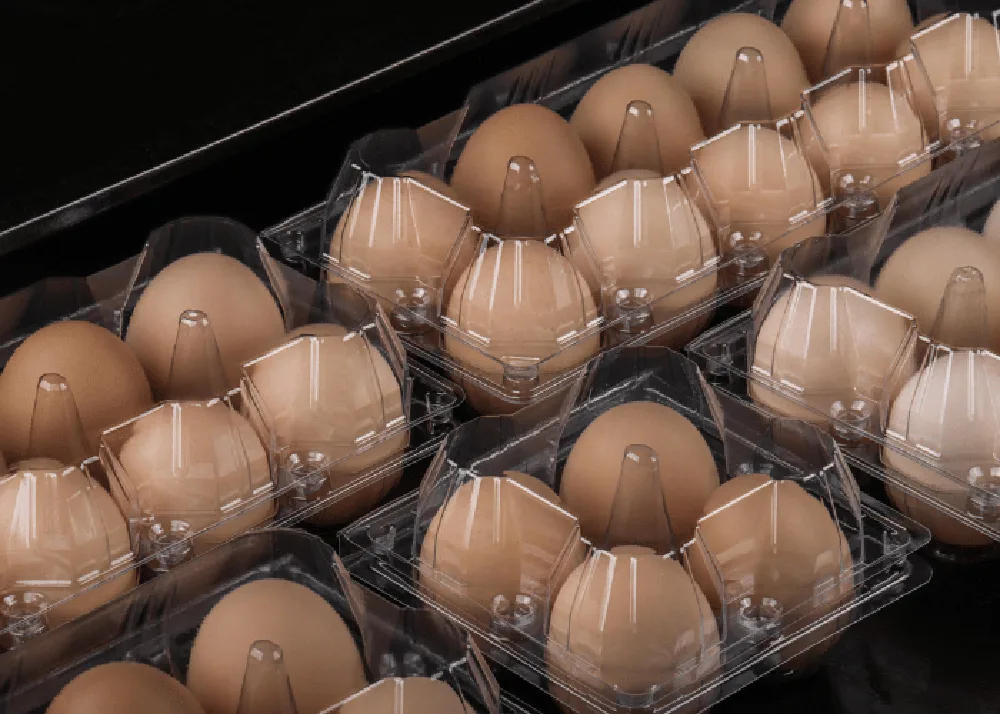
A suitable plastic egg container should keep each egg stable without pressing it too tightly. If the cavity is too small, the egg may be under pressure and become easier to damage. If the cavity is too large, the egg may move during transportation and increase the risk of breakage.
For buyers, the key is simple:
The right egg packaging should match the egg size, protect the eggs during transport, and make the product look better at retail.
Why Egg Weight, Diameter and Height Matter
Before choosing plastic egg packaging, buyers should confirm three basic details:
- Egg weight
- Egg diameter
- Egg height
Egg weight alone is not enough. Two eggs with similar weight may still have different shapes. Some eggs are longer, while others are rounder. This is why egg diameter and egg height are important when selecting the right egg tray packaging.
For example, some eggs may be around 60g, while larger eggs may be 65g, 70g, 73g or even bigger. When the egg weight increases, the egg diameter and egg height usually increase as well. This means the inner cavity of the plastic egg container must also be suitable.
For larger eggs, we recommend testing real egg samples before confirming the final model. This helps avoid common problems such as tight fitting, egg shaking, poor buckle closing, or pressure on the shell.
STL PET Egg Packaging Options from 6 to 30 Eggs
The following PET egg packaging models are available in our egg packaging series. Buyers can compare by capacity, product size, outer box size, packing quantity, and product weight.
| Model | Capacity | Product Size, mm | Outer Box Size, mm | Qty / Outer Box | Product Weight |
|---|---|---|---|---|---|
| STL-6M | 6 eggs | 146 × 103 × 66 mm | 620 × 325 × 440 mm | 800 pcs | 16g |
| STL-8M | 8 eggs | 190 × 102 × 66 mm | 445 × 380 × 385 mm | 400 pcs | 20g |
| STL-10M | 10 eggs | 236 × 102 × 66 mm | 485 × 415 × 430 mm | 400 pcs | 27g |
| STL-12M Slim Layout | 12 eggs | 281 × 102 × 66 mm | 685 × 585 × 460 mm | 800 pcs | 30.5g |
| STL-12M Compact Layout | 12 eggs | 193 × 148 × 66 mm | 650 × 400 × 310 mm | 400 pcs | 27g |
| STL-15M | 15 eggs | 236 × 147 × 66 mm | 480 × 420 × 610 mm | 400 pcs | 36.5g |
| STL-20M | 20 eggs | 237 × 195 × 66 mm | 501 × 400 × 475 mm / 400 × 240 mm | 200 pcs | 47g |
| STL-30M | 30 eggs | 282 × 241 × 66 mm | 515 × 400 × 475 mm | 200 pcs | 70g |
| STL-JD30Z | 30 eggs | 300 × 250 × 72 mm | 515 × 480 × 605 mm | 200 pcs | 86g |
The product size, packing quantity, and product weight help buyers quickly compare different egg packaging options. However, the final model should still be confirmed by real egg fitting tests, especially for larger eggs or premium egg products.
How to Choose the Right Egg Packaging Capacity
Different egg counts are suitable for different sales channels. Choosing the right capacity can help improve shelf display, packing efficiency, and customer buying experience.
6-Egg Packaging
A 6-egg plastic container is suitable for small retail packs, premium eggs, farm shop sales, convenience stores, and trial-size packaging. It is compact, easy to carry, and suitable for higher-value egg products.
8-Egg and 10-Egg Packaging
8-egg and 10-egg plastic egg containers are good options for retail channels that need a medium-sized pack. They provide more quantity than a small 6-egg pack but still remain compact enough for supermarket shelves.
12-Egg Packaging
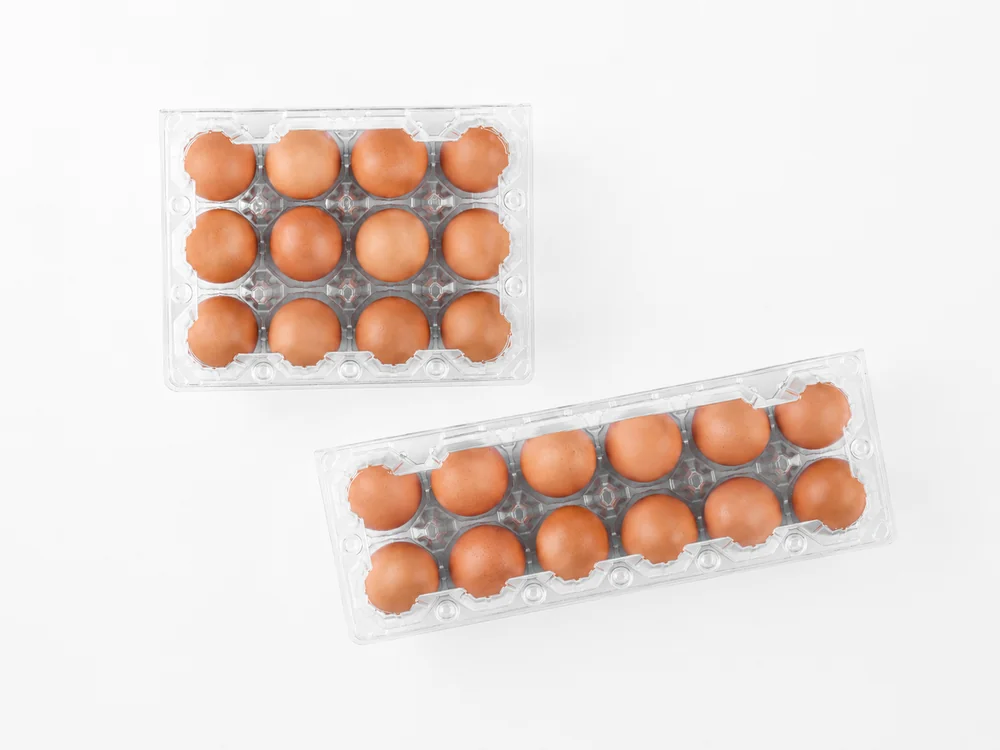
12-egg packaging is one of the most common retail choices in many markets. It can be designed in different layouts, such as a slim layout or compact layout. A slim layout often looks cleaner and more premium on the shelf, while a compact layout may be better for certain storage and shipping requirements.
15-Egg and 20-Egg Packaging
15-egg and 20-egg containers are suitable for family packs, distributors, wholesalers, and supermarket bulk retail. They provide more eggs per pack while still keeping the package manageable for retail display.
30-Egg Packaging
30-egg packaging is mainly used for farms, wholesale supply, distributors, food service, and bulk sales. Compared with smaller retail packs, 30-egg containers need stronger structure, better stacking performance, and stable support during transportation.
Layout Matters: Slim Layout vs Compact Layout
For the same egg count, different layouts can create different shelf effects.
For example, a 12-egg PET egg container may have a slim layout or a compact layout.
The slim layout is usually longer and cleaner. It is suitable for shelf display, brand labels, and premium retail presentation. It can also provide more visual space for branding and product information.
The compact layout takes less shelf width and may be more suitable for certain packing, storage, or transportation requirements.
There is no single layout that is always better. The right choice depends on:
- Retail shelf space
- Brand display area
- Outer box packing
- Shipping efficiency
- Customer market preference
- Egg size and cavity structure
For retail display, the slim layout often looks more elegant. For packing efficiency, the compact layout may sometimes be more practical.
Cavity Design: Each Egg Needs Stable Support
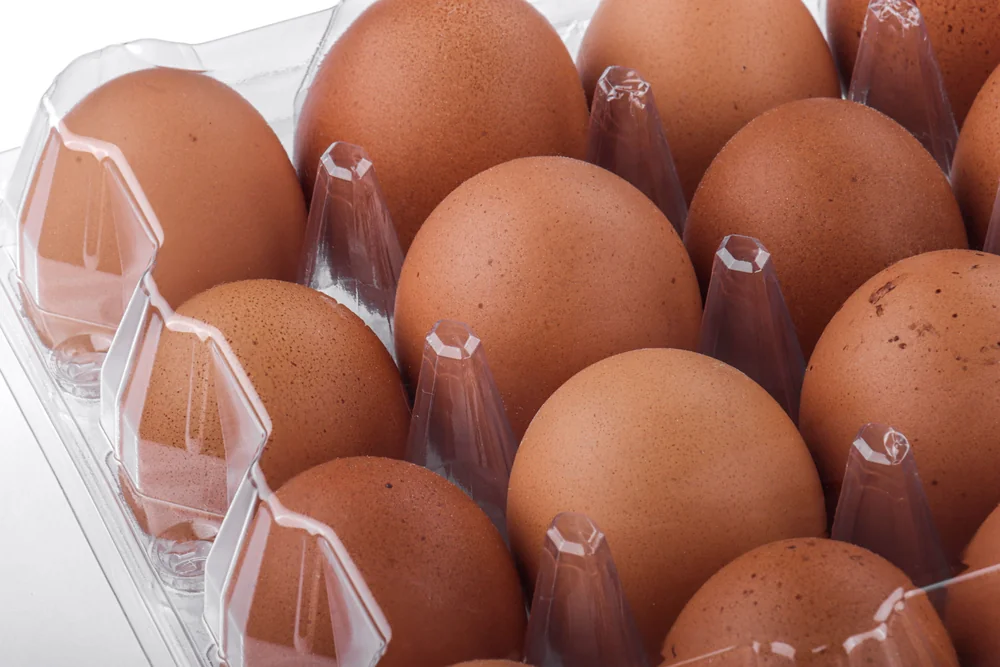
For plastic egg packaging, the cavity design is critical. Each egg should sit in an individual cavity, with enough support around the egg.
A good cavity design can help:
- Reduce egg movement
- Improve protection during handling
- Keep eggs separated
- Improve stacking stability
- Make the product look clean and organized
The inner cavity should match the actual egg diameter and height. For larger eggs, the cavity needs to be larger and deeper. For smaller eggs, the cavity should not be too large, otherwise the eggs may move during transportation.
The goal is not to make the cavity as tight as possible. The goal is to keep the egg stable without adding unnecessary pressure to the shell.
This is especially important for clear plastic egg cartons for transport, because eggs may go through multiple handling steps before reaching the final retail shelf.
Buckle Design: Small Detail, Big Protection
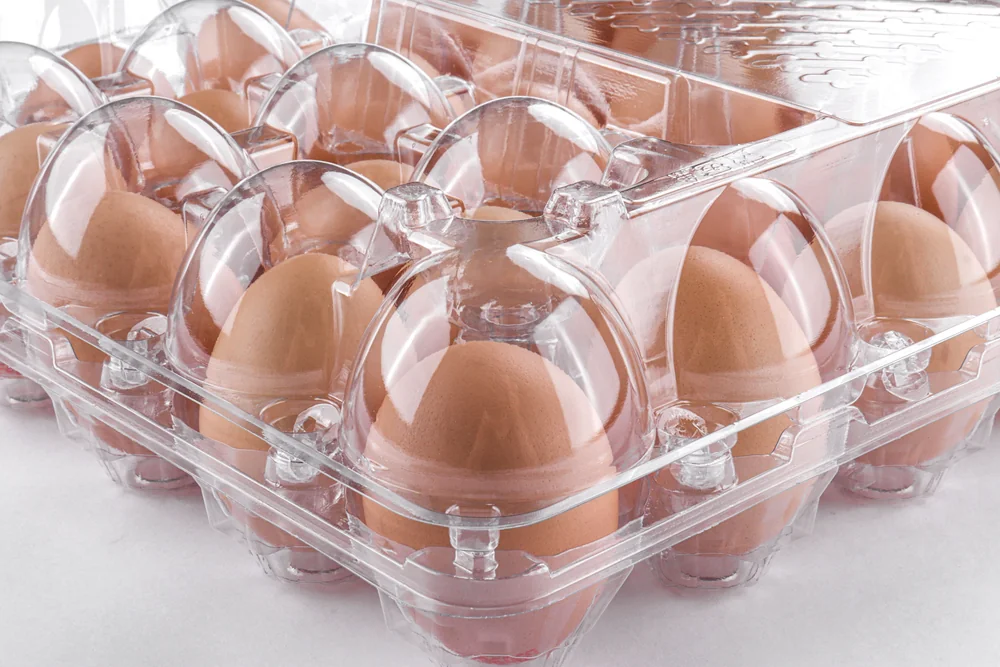
The buckle is one of the most important details in plastic egg packaging. It helps keep the package closed during handling, transportation, storage, and retail display.
A good buckle should be:
- Easy to close
- Easy to open
- Stable after repeated use
- Not too loose
- Not too tight
- Strong enough to reduce accidental opening
If the buckle is too loose, the package may open during transportation and the eggs may move inside. If the buckle is too tight, customers may need too much force to open it, which can affect the user experience.
The best buckle is not the tightest one. The best buckle is the one that closes smoothly, holds firmly, and protects the eggs properly.
For supermarket packaging, buckle performance is especially important because the package may be opened, checked, moved, stacked, and handled many times before reaching the final consumer.
Stackability and Strong Support Columns
Good egg packaging should not only protect each egg individually. It should also be stackable.
For supermarkets, distributors, and export buyers, stacking performance is important because products may go through storage, loading, transportation, warehouse handling, and retail display.
Strong support columns and a stable thermoformed structure can help:
- Improve stacking performance
- Reduce deformation
- Protect eggs during transportation
- Make warehouse handling easier
- Support better shelf presentation
For bulk orders, stacking and outer box packing should be checked before final confirmation. This is especially important for 20-egg and 30-egg packaging, because larger packs carry more weight and require better structural support.
Clear PET Egg Packaging for Better Retail Display
Clear PET egg packaging allows customers to see the eggs directly without opening the package. This is one of the biggest advantages of transparent plastic egg containers.
Clear packaging helps customers check:
- Egg color
- Egg size
- Egg appearance
- Product freshness
- Overall product quality
For retail sales, visibility is important. A clean and transparent PET egg container can make the product look more premium and trustworthy on the shelf.
For premium eggs, organic eggs, free-range eggs, and private-label supermarket products, clear PET packaging can improve the overall product presentation and make the brand easier to recognize.
This is why many buyers searching for clear plastic egg cartons, PET egg cartons, or egg clamshell packaging are actually looking for transparent thermoformed plastic packaging rather than traditional paper packaging.
PET and RPET Material Options
PET is commonly used for clear plastic egg packaging because it has good transparency, good forming performance, and a clean appearance. It is suitable for retail packaging where product visibility is important.
For customers with sustainability requirements, RPET can also be considered. RPET is suitable for brands, supermarkets, and distributors that need packaging with recycled material content.
In general:
- PET is suitable for clear retail display.
- RPET is suitable for customers with recycled material requirements.
- Material selection should depend on the target market, brand positioning, and certification needs.
If the customer has specific requirements for recycled material, food contact documents, or certification support, these details should be confirmed before production.
For buyers looking for PET plastic trays, clear PET trays, or rPET trays, egg packaging can also be developed as part of a broader thermoformed food packaging solution.
Color Options for Plastic Egg Packaging
Clear is the most common color for PET egg packaging because it allows customers to see the eggs clearly.
However, colored packaging can also be considered for specific brand or market needs. Available color options may include:
- Clear
- Black
- Blue
- Green
- Purple
- Pink
- Yellow
- Orange
Custom colors can be discussed based on order quantity, material, and production requirements.
For most retail egg packaging, clear PET is still the safest and most popular option because it provides strong product visibility.
Labeling and Printing Options
Egg packaging is not only used to protect eggs. It is also part of the product image.
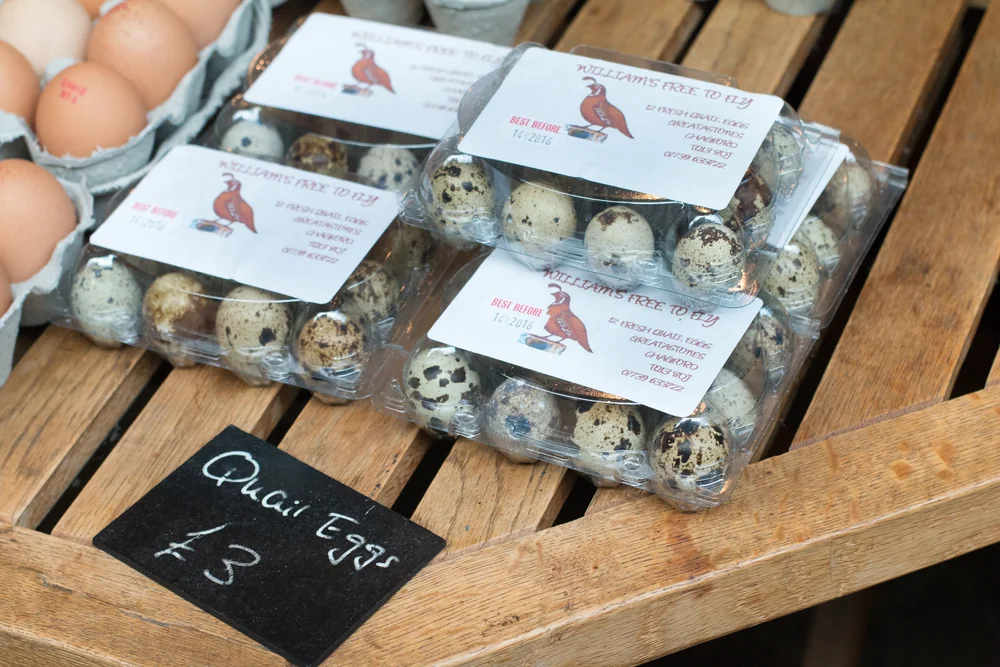
For farms, supermarket brands, distributors, and private-label customers, labeling and printing can increase the value of the final product. A good label can show the brand name, product grade, barcode, traceability information, nutrition information, and selling points.
Common labeling options include:
- Top label
- Side label
- Barcode label
- Product information label
- Traceability label
- Private-label supermarket sticker
For some PET egg containers with a suitable flat surface, printing can also be considered.
Common printing options include:
- Logo printing
- Brand name printing
- Simple pattern printing
- Product information printing
- Flat surface printing
If the artwork has many colors or complex designs, labeling is usually more flexible and cost-effective. If the design is simple, such as a logo or short text, direct printing may be a good option.
This gives buyers a one-stop solution from packaging selection to brand presentation.
One-Stop Custom Egg Packaging Support
For many buyers, egg packaging selection is not only about choosing an existing model. They may also need size matching, sample checking, label design, printing, and custom mold development.
As a thermoformed plastic packaging supplier, we can support customers with:
- Existing PET egg packaging models
- PET and RPET material options
- Clear and colored packaging options
- Sample checking
- Egg size matching
- Custom label solutions
- Printing solutions
- Custom mold development
- Bulk production
- Export packing support
This helps customers save time and reduce communication costs by working with one packaging supplier.
For buyers who cannot find a suitable existing model, custom thermoformed egg packaging can be developed based on egg samples, drawings, target capacity, layout, and market requirements.
This is where a professional plastic egg carton manufacturer or custom plastic food packaging supplier can provide more value than simply offering standard stock items.
What Information Should Buyers Provide Before Ordering?
To recommend the right PET egg packaging, buyers should provide as much information as possible before quotation.
Useful information includes:
- Egg type: chicken egg, quail egg, duck egg, or other egg type
- Egg weight range
- Egg diameter
- Egg height
- Required egg count per pack
- Preferred product size
- Material requirement: PET or RPET
- Clear or colored packaging requirement
- Labeling or printing requirement
- Target market
- Monthly or annual order quantity
- Existing mold or custom mold requirement
- Outer box packing requirement
With this information, we can recommend a more suitable model and arrange sample checking more efficiently.
For buyers comparing egg tray packaging suppliers or wholesale egg cartons manufacturers, providing accurate egg dimensions at the beginning can shorten the sample confirmation process and reduce the risk of choosing the wrong model.
Common Questions Before Choosing Egg Packaging
1. What information should I provide before choosing egg packaging?
Please provide egg type, egg weight, egg diameter, egg height, required egg count per pack, material requirement, and whether you need labeling, printing, or custom mold development.
2. Can the same PET egg container fit both 65g and 70g eggs?
It depends on the actual egg diameter and egg height. Egg weight is only one reference. We recommend testing real egg samples before confirming the final packaging model.
3. What is the difference between plastic egg packaging and pulp egg cartons?
Plastic egg packaging, especially clear PET egg packaging, provides better product visibility and retail presentation. Pulp egg cartons are more opaque and are commonly used for basic protection. The right choice depends on market positioning, shelf display needs, transportation requirements, and sustainability preferences.
4. Can I get samples before mass production?
Yes. Sample checking is recommended, especially for larger eggs or when the buyer has specific requirements for cavity fit, buckle strength, stacking performance, or retail display.
5. Can you provide labeling, printing, or custom mold service?
Yes. We can support custom labels, simple printing, and new mold development based on egg samples, drawings, product size, and market requirements.
Conclusion
Choosing the right egg packaging requires more than selecting a capacity. Buyers should consider egg weight, egg diameter, egg height, cavity fit, layout, buckle design, stacking performance, material, labeling, printing, outer box packing, and retail display effect.
Our PET egg packaging series includes different options from 6 to 30 eggs, covering small retail packs, supermarket packs, family packs, wholesale packs, and bulk egg packaging.
For buyers who need an accurate solution, we recommend sample testing before confirming the final model. Whether you need clear PET egg containers, RPET options, custom labels, printing, or new mold development, we can provide one-stop support from packaging selection to mass production.
Contact us to get samples, confirm the right egg packaging model, or develop custom thermoformed egg packaging for your market.